Explore social media video production services that drive engagement and help ecommerce brands create fresh content for paid campaigns.
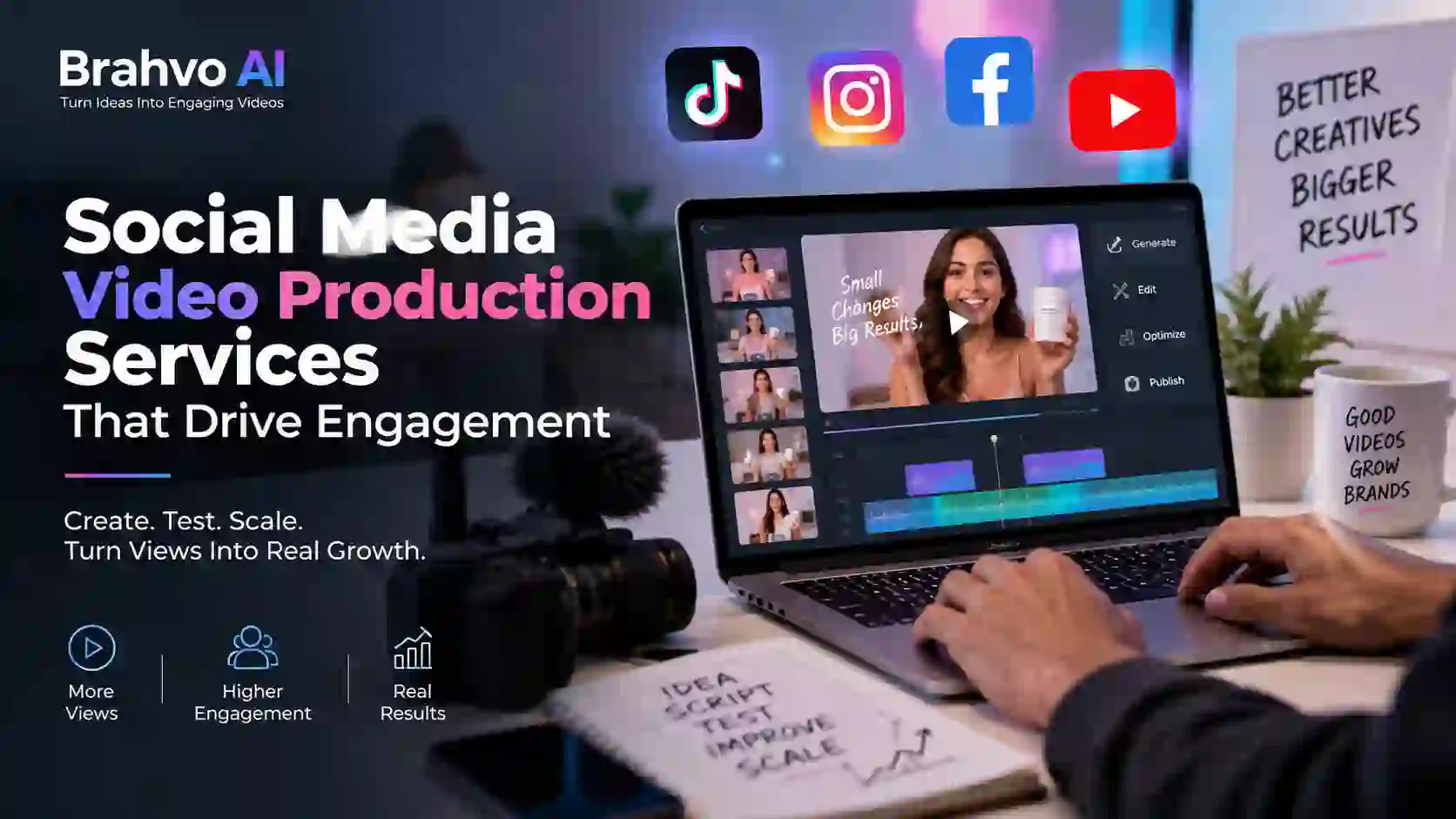
A lot of ecommerce teams are dealing with the same frustrating problem. Their paid social campaigns may have strong targeting, a reasonable budget, and a product people genuinely want, yet performance starts slipping because the ads themselves have become stale.
The creative that worked six weeks ago suddenly stops pulling the same results. Click-through rates soften. Customer acquisition costs climb. Media buyers ask for new variations. Founders want to know why a campaign that was scaling smoothly now needs another round of creative production.
This is one reason social media video production services that drive engagement have become increasingly important for ecommerce and DTC brands.
Social platforms are crowded, and users are exposed to an enormous volume of video content every day. For brands, producing one polished campaign video and running it for months is rarely enough. Paid media teams need fresh concepts, different hooks, new customer angles, product demonstrations, creator-style videos, and variations that can be tested against one another.
The pressure is especially noticeable for brands running campaigns across Meta Ads and TikTok Ads. These platforms reward creative that can hold attention, communicate the product quickly, and give people a reason to keep watching. A technically beautiful video can still fail if the first few seconds do not make someone stop scrolling.
That changes the role of video production.
The question is no longer simply, "Can we create a good-looking social media video?" The more useful question is, "Can we consistently produce enough relevant creative to test what actually works?"
Strong social media video production services that drive engagement help address that problem by focusing on the relationship between creative production and actual marketing performance. Engagement is not the only metric that matters, of course. A video can generate views and reactions without producing profitable customers. But attention is usually the first hurdle.
If nobody stops to watch, the rest of the message does not get a chance.
For a DTC brand managing multiple products, seasonal promotions, and ongoing acquisition campaigns, the need for fresh video can become a serious operational bottleneck. Traditional production cycles may be too slow for the pace at which paid media teams want to test new ideas. By the time one creative batch is produced, approved, and launched, the winning angle may have changed.
This is where AI-assisted production is starting to change the conversation. Brahvo AI can help brands create and adapt social video content with a production process better suited to frequent creative testing and changing campaign needs.
The objective is not to replace every traditional production method. Some campaigns still need live shoots, product photography, creators, and larger production teams. But for many ecommerce advertising needs, the ability to create more video variations without treating every new concept like a full production project can make a real difference.
And sometimes the most important video is not the one the creative team originally thought would win.
There is no single formula for creating engaging social media content. If there were, media buying would be much easier.
Still, certain patterns show up repeatedly when brands test video creative at scale.
The first few seconds matter because users are making an extremely quick decision about whether to continue watching or move on. That does not necessarily mean every video needs a loud statement, dramatic editing, or an exaggerated hook. In some categories, a simple product demonstration can work better than an aggressive opening.
What matters is that the viewer quickly understands why the content may be relevant.
For example, a skincare brand may open with a visible product problem. A kitchen product brand might immediately show the product being used. A fashion brand may lead with the finished look rather than a slow introduction. A supplement company could start with a customer frustration that feels familiar to its target audience.
The creative needs a reason to exist in the viewer's feed.
The Hook Is More Than a Clever Opening Line
When marketers talk about hooks, they often focus on the first sentence. But a hook can also be visual.
A close-up demonstration. An unexpected product result. A customer reaction. A before-and-after moment. A question displayed on screen.
For social media video production services that drive engagement, this distinction matters because production decisions should support the advertising idea rather than simply make the video look polished.
A media buyer might want to test five different opening hooks using the same core product footage. Another campaign may require the same visual concept but with different customer pain points. A new product launch could need multiple versions aimed at completely different audiences.
This creates a much larger production requirement than simply creating one final video.
The Message Has to Move Quickly
Social media users generally do not owe a brand their attention. That sounds obvious, but it changes how video should be produced.
Long introductions often create unnecessary friction. Product explanations may need to happen earlier. Text on screen can help communicate context before the viewer turns on sound. Visual changes can keep the content moving without making it feel chaotic.
The best approach depends heavily on the product and audience.
I might be wrong here, but the obsession with making every social video shorter can sometimes go too far. A 10-second video is not automatically more engaging than a 30-second video. If a product requires explanation, cutting everything down may remove the information that actually helps someone decide to buy.
The goal is not always shorter.
The goal is fewer wasted seconds.
Engagement Often Starts With Relevance
A social media video does not need to appeal to everyone. In fact, trying to appeal to everyone can make creative less specific.
A pet product brand targeting new dog owners may create different video content from a brand speaking to experienced pet owners. A beauty company selling a product for a specific concern may need creative that directly reflects that concern rather than relying on broad lifestyle imagery.
This is where social media video production services that drive engagement become connected to audience understanding.
The production team needs to know what message is being tested and why. Without that context, video creation can turn into a process of producing attractive assets with no clear connection to campaign goals.
Brahvo AI can support brands that need a higher volume of video concepts and creative variations while keeping the underlying advertising message in focus. Different hooks, formats, scripts, visual treatments, and product angles can be explored without requiring the same process for every variation.
Not every variation will win. Most probably will not.
That is normal.
Creative fatigue is one of the most common problems in paid social advertising.
A campaign starts performing well. The brand increases spend. The same winning creative is shown to more people. Over time, performance begins to change.
The audience may have seen the ad too many times. The novelty disappears. Engagement declines. Conversion costs increase.
Sometimes targeting is blamed when the real issue is creative fatigue.
This is particularly difficult for ecommerce brands that have limited internal production resources. The media buying team can identify the need for fresh creative, but the creative team may already be managing product launches, organic content, email assets, and other priorities.
Then there is the approval process.
A media buyer requests new videos. The creative team develops concepts. Feedback comes from several people. Revisions take place. The videos are finally delivered after the campaign performance has already changed again.
That gap between creative demand and creative production can become expensive.
Winning Ads Need Variations Before They Stop Working
One mistake brands make is waiting until a campaign has already declined before producing new creative.
A better approach is often to treat a winning ad as the starting point for more testing.
If a particular customer problem is generating strong results, the team can test different ways of presenting that problem. If a product demonstration performs well, new demonstrations can be created. If one creator-style format works, the underlying message can be tested with different visual treatments.
This does not mean copying the same ad repeatedly.
It means understanding what may be responsible for the performance and testing adjacent ideas.
Consider a hypothetical DTC home product brand running Meta Ads. One short video showing how quickly the product solves a common household frustration starts producing strong conversion volume. Instead of waiting for the audience to tire of it, the marketing team develops several variations.
One version opens with the frustration.
Another starts directly with the product in use.
A third uses a customer-style testimonial approach.
A fourth focuses on the time saved.
The product remains the same, but the entry point changes.
That gives the media buyer more options and creates a better opportunity to understand which message continues to work as the campaign scales.
Social media video production services that drive engagement can support this kind of creative pipeline by making variation production part of the ongoing campaign process rather than an emergency response.
More Creative Does Not Automatically Mean Better Performance
There is an important tradeoff here.
Producing more video assets can help brands test more ideas, but high volume without clear thinking can create a different problem. The advertising account becomes filled with minor variations that do not test anything meaningful.
Changing a background color or adjusting a single line may not always produce useful learning.
Brands should consider what they are actually testing.
Is it the hook?
The customer problem?
The product demonstration?
The offer?
The format?
The audience angle?
AI-assisted production can make it easier to create more variations, but the marketing team still needs a reason for creating them.
Production speed matters. Creative judgment still matters too.
One video does not necessarily perform the same way everywhere.
The basic product message may remain consistent, but how it is presented can change depending on the platform, placement, audience expectations, and campaign objective.
Meta Ads may require a brand to produce creative for multiple placements and campaign stages. TikTok audiences may respond differently to pacing and presentation. Social content that feels natural in one environment may look out of place in another.
That is why simply resizing the same video is not always enough.
Meta Ads Often Require More Testing Than Teams Expect
For ecommerce advertisers, Meta Ads can involve constant creative experimentation.
Different campaign objectives may need different messages. Prospecting audiences may require more product education, while warmer audiences may respond to customer proof or stronger product-specific messaging.
A brand with several SKUs can quickly face a large number of creative requirements.
Product A needs new acquisition videos.
Product B is launching.
Product C has an existing winner that needs variations.
A seasonal promotion requires fresh messaging.
Suddenly, the creative request list is long.
Brahvo AI can help support this demand by creating social media video content designed around multiple concepts and campaign needs. The value is not just in producing a finished video. It is in helping brands maintain a usable supply of creative that can be tested, adapted, and refreshed.
TikTok Ads Need a Different Creative Mindset
TikTok advertising often creates pressure to produce content that feels less like a traditional commercial.
Users are used to fast-moving, creator-style, conversational content. That does not mean every ad must look casual or unpolished, but overly produced creative can sometimes feel disconnected from the surrounding feed.
Product demonstrations, relatable scenarios, creator-style storytelling, and direct problem-solution formats can all become useful testing approaches.
The important point is that brands should not assume one successful format will work indefinitely.
Social behavior changes. Audience responses change. Products also change depending on where they are in their lifecycle.
Fresh thinking is needed.
For social media video production services that drive engagement, this means the production process should be flexible enough to support different creative styles without forcing every video into the same visual template.
The Creative Idea Should Come Before the Production Treatment
Sometimes marketing teams start with the question, "What kind of video should we make?"
A more useful question may be, "What are we trying to make the viewer think or understand?"
The production treatment should follow that.
If the goal is to demonstrate a product benefit, a clear visual demonstration may be the best choice. If the objective is to create curiosity around a problem, the opening may need a stronger storytelling element. If customer trust is the issue, testimonial-style creative may be more appropriate.
This sounds simple. It gets messy when several stakeholders are involved.
One person wants the brand to look premium. Another wants content that feels native to social media. The media buyer wants five new hooks. The founder wants product details included.
And the video has to do all of that in 20 seconds.
Not easy.
For many ecommerce brands, video production is no longer something that happens only around major campaigns.
It is becoming an ongoing requirement.
Customer acquisition campaigns need fresh ads. New products need launch content. Existing products need new angles. Winning creatives need variations. Seasonal promotions need updated messaging.
The brands that struggle are often not short of ideas. They are short of production capacity.
A founder may have a list of 20 creative concepts based on customer reviews, competitor research, media buying insights, and team discussions. Turning those ideas into usable video assets is the difficult part.
Traditional production can be valuable, but it may not always be practical for every creative test. Organizing talent, locations, equipment, and production schedules for every new advertising angle can slow down experimentation.
This is where social media video production services that drive engagement can become part of a broader performance marketing workflow.
Brahvo AI helps brands address the need for more frequent video production by supporting AI-powered video creation and creative adaptation. This can give ecommerce teams more flexibility when they need to test concepts, refresh campaigns, or create additional variations around existing marketing messages.
One of the biggest mistakes in paid social is assuming that a product has only one story worth telling.
The product is the same, but the reason someone pays attention can be completely different.
One customer may care about convenience. Another may care about price. Someone else may have been frustrated with the same problem for years and immediately responds to a direct problem-solution message. A fourth customer may not even realize the product is relevant until they see it demonstrated.
This is why creative testing should go beyond changing captions or making minor edits to the same video.
Strong social media video production services that drive engagement give brands the ability to test genuinely different angles.
Test the Problem, Not Just the Production Style
A common ecommerce product can often be positioned around several customer motivations.
Take a hypothetical DTC kitchen brand selling a compact appliance. The same product could be introduced through different angles:
• A busy parent looking for a faster solution
• A customer frustrated by kitchen clutter
• A demonstration of how the product works
• A focus on time saved during daily use
• A customer-style story about replacing an older product
Each concept is testing something different.
The mistake would be creating five videos that look slightly different but communicate exactly the same message. That may create more assets, but it does not necessarily produce better learning.
A paid media team should be able to look at a creative test and ask what changed.
If the answer is unclear, the test may not reveal much.
Hooks Are Usually the First Testing Opportunity
The opening of a video can change how people interpret everything that follows.
For one product, a direct statement may work best:
"Still spending 20 minutes doing this by hand?"
For another, the product itself may be the hook.
A quick visual demonstration can sometimes communicate more than several seconds of explanation.
Brands can also test curiosity, customer frustrations, unexpected results, social proof, and product comparisons within their own category without making the creative feel repetitive.
Brahvo AI can support this process by helping teams create multiple versions around different creative concepts. Instead of producing one master video and hoping it performs, brands can build variations designed to test specific messages.
That matters when customer acquisition costs are rising and every paid media decision has more financial pressure behind it.
Not Every Winning Angle Should Be Scaled Forever
There is another side to this.
Once a video starts performing well, teams can become overly attached to it.
That is understandable. Finding a profitable creative is difficult.
But continuing to rely on one winning angle can create problems when performance eventually declines. A better approach is often to develop related ideas while the original creative is still working.
If a product demonstration is winning, test different demonstrations.
If a particular customer problem is resonating, explore adjacent problems.
If a founder-led message works, test the same core idea with another presentation style.
The point is not to abandon what works. It is to avoid being left with nothing when the audience becomes tired of seeing the same thing.
That creative bench matters.
For social media video production services that drive engagement, the ability to produce and test multiple angles is often more commercially useful than producing one highly polished asset that cannot be easily adapted.
AI is changing how brands think about video production, but there is still some confusion about where it actually fits.
AI does not automatically make a weak campaign effective. It does not understand a customer's buying motivation simply because a brand uploads product information. And it cannot remove the need for people who understand advertising, creative strategy, and customer behavior.
What AI can do is reduce some of the friction involved in producing video at volume.
That distinction is important.
Ecommerce teams often need more creative than traditional production schedules can comfortably support. They need new hooks, fresh messaging, additional formats, revised scripts, and creative variations. AI can help make parts of that production process faster and more flexible.
AI Makes Variation More Practical
Speed Matters When Campaign Conditions Change
AI Video Production Works Best as Part of the Creative Process
The strongest use of AI is often not replacing every part of video production. It is giving brands more flexibility within their existing creative workflow.
A campaign might begin with customer research and paid media insights. The team identifies several possible messages. Brahvo AI can then help turn those concepts into video variations that are suitable for social media testing.
The results from those tests can influence the next round of creative.
Over time, the process becomes more responsive.
The brand is not producing videos simply because the content calendar says it needs more videos. It is creating new assets based on what the market, campaign data, and customer behavior are revealing.
That is a more useful way to think about social media video production services that drive engagement.
The engagement is not created by technology alone.
Technology simply makes it easier to keep experimenting.
Ecommerce brands often reach a point where their creative needs grow faster than their production process.
This usually happens gradually.
At first, the team may need a few videos each month. Then new products are introduced. Paid advertising spend increases. Meta Ads campaigns require more testing. TikTok Ads become another creative channel. The brand starts working with UGC creators and wants additional variations from successful concepts.
Soon, producing enough creative becomes a full operational challenge.
Brahvo AI helps address this by supporting AI-powered video production for brands that need more flexibility, variation, and creative output.
Producing More Than One Version of the Same Idea
A single campaign concept can lead to several usable creative directions.
The same product message might be presented through:
• Different opening hooks
• Different scripts
• Alternative voice styles
• New visual treatments
• Product-focused demonstrations
• Customer problem scenarios
• Short-form social video formats
This allows marketing teams to explore more possibilities without forcing every variation through the exact same traditional production process.
For brands managing several SKUs, this can become particularly valuable.
A company selling one product may be able to manage creative production manually for longer. A brand selling 20 products while running paid acquisition campaigns has a different problem.
Every SKU may need its own messaging.
Every product launch creates additional creative requirements.
And some products will need much more testing than others.
Supporting Paid Media Teams With Fresh Creative
A creative production partner should understand that paid media requirements can change quickly.
The media buying team may need new variations because frequency is increasing. A previously strong concept may need a different hook. A new customer angle may emerge from campaign performance.
Brahvo AI can help support this ongoing need for fresh video production.
Instead of treating video creation as a one-time campaign activity, brands can use a more continuous approach to creative development. This can make it easier to maintain a flow of assets for testing and campaign refreshes.
There is a practical business reason for this.
When a paid media team has no new creative available, budget decisions become more difficult. They may reduce spending on campaigns that could potentially continue performing with fresh creative. Or they may continue spending despite signs that the existing ads are losing effectiveness.
Neither situation is ideal.
Scaling Creative Without Making Every Video Identical
Volume creates its own risks.
When brands need a lot of content quickly, the temptation is to use the same format repeatedly. The videos may change slightly, but they begin to look and sound almost identical.
That can create another form of creative fatigue.
Brahvo AI can support a wider range of creative variations while helping brands maintain consistency around the core product and campaign message. The objective is not simply to create more content. It is to create enough meaningful variation to give paid media teams something useful to test.
Some concepts will need more work than others.
Some will be obvious failures.
One slightly awkward creative may outperform the polished version. It happens.
That is one reason creative production at scale should remain connected to testing. Without feedback from the campaigns, production can become disconnected from performance.
More brands are investing in video, but producing more content does not automatically solve creative problems.
Several mistakes appear repeatedly across ecommerce advertising teams.
Making Videos That Look Good but Say Very Little
Production quality matters, especially for certain products and brand positions. But visual polish alone does not create engagement.
A beautifully produced video can still lose attention if the viewer does not understand why they should care.
Brands should consider the message before adding more production layers.
What customer problem is being addressed?
What makes the product relevant?
Why should someone keep watching?
Those questions can be more important than another camera angle.
Using the Same Creative for Too Long
A winning ad can create false confidence.
Teams sometimes continue running it until performance has clearly declined before starting the next production cycle.
By that point, the media buyer may already need replacement creative.
Developing new concepts while existing campaigns are still performing gives brands more room to test without reacting under pressure.
Confusing Small Edits With Real Testing
Changing the color of a text overlay may be useful in some situations.
But it is not always a meaningful creative test.
Brands should distinguish between production variations and strategic variations. Testing a new hook or customer problem can reveal more than making several nearly identical edits.
Ignoring the Context of the Platform
A video developed for one environment may not automatically feel natural somewhere else.
Pacing, presentation, aspect ratio, and audience expectations can affect how content is received. Simply exporting the same creative in another format does not always solve the problem.
Social media video production should consider where the content will actually appear.
Producing Content Without a Clear Feedback Loop
This may be one of the more expensive mistakes.
Creative teams produce videos. Paid media teams launch them. Results come in. But nobody uses those results to influence the next production cycle.
The same process repeats.
Over time, the brand has a large content library but limited understanding of why certain videos performed better.
For social media video production services that drive engagement, production and campaign learning should remain connected. Brahvo AI can help brands create new video assets, but the strongest outcomes happen when those assets are informed by real advertising needs and ongoing creative testing.
What are social media video production services that drive engagement?
They involve creating video content designed to capture attention and encourage meaningful audience interaction on social platforms. For ecommerce brands, this can include product videos, paid social ads, creative variations, demonstrations, and short-form campaign content.
Why do ecommerce brands need fresh social media video content?
Creative fatigue can reduce the effectiveness of paid campaigns over time. Fresh video content gives media buyers more options for testing new messages, hooks, and creative approaches.
How often should a brand create new social media video ads?
There is no universal schedule. It depends on ad spend, audience size, campaign frequency, product range, and how quickly existing creative begins to lose effectiveness. High-spend brands usually need a more active creative pipeline than brands running smaller campaigns.
Can AI help produce video ads for Meta Ads and TikTok Ads?
Yes. AI can help speed up parts of the video production process and make it more practical to create multiple creative variations. The advertising strategy still needs human judgment.
Does more video content always lead to better advertising performance?
No. Producing more videos without testing meaningful ideas can create unnecessary volume. Quality of the creative hypothesis matters as much as the number of assets being produced.
What should brands test in social media video creative?
Brands can test opening hooks, customer problems, product demonstrations, messaging angles, scripts, offers, pacing, and visual treatments. The best tests usually change one meaningful idea rather than making random edits.
How can Brahvo AI support ecommerce video production?
Brahvo AI supports brands with AI-powered video production and creative variations that can help meet the ongoing demand for social media and paid advertising content. This can be useful when teams need fresh creative for multiple campaigns or products.
Should brands replace traditional video production with AI?
Not necessarily. Some campaigns still benefit from traditional shoots, original footage, creators, and larger production work. AI can be particularly useful when brands need speed, flexibility, or multiple creative variations.
What is the biggest challenge with social media video production at scale?
For many brands, the challenge is maintaining creative variety. Producing a high volume of videos is possible, but producing a high volume of distinct ideas that are actually worth testing is harder.
How do brands know which video angles are worth producing next?
The strongest starting point is usually a combination of customer feedback, paid campaign performance, product insights, and creative testing results. The next round of production should ideally build on what the brand has already learned.