Explore video production for lawyers in Los Angeles to build client trust, explain legal services, and create effective video ads.
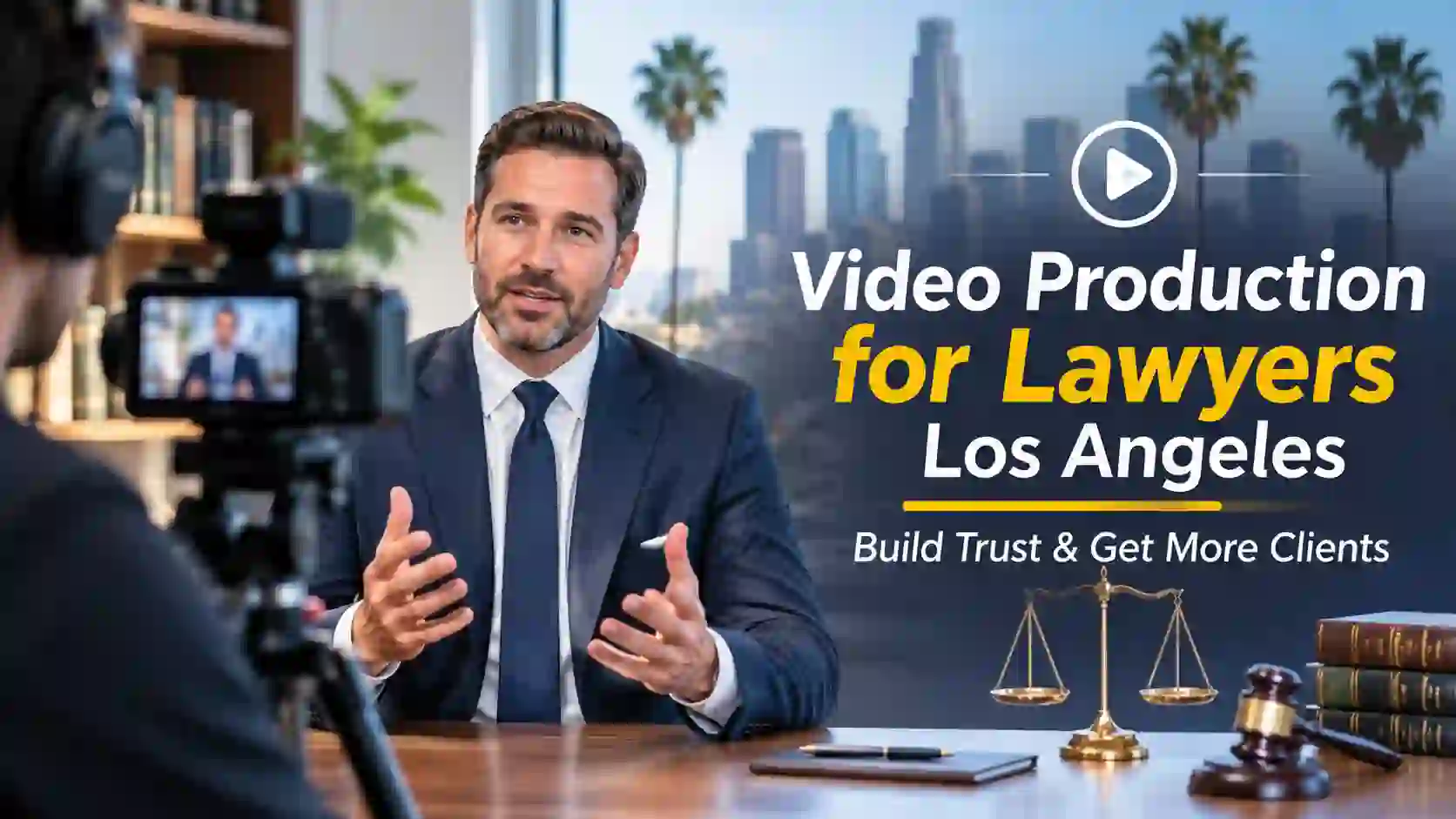
Los Angeles has a large legal market with firms handling personal injury, criminal defense, employment disputes, immigration, family law, estate planning, and business litigation. For someone searching online, several attorneys may appear qualified to handle the same issue.
The challenge for law firms is communicating their value without making every marketing message sound identical. Most websites already include attorney biographies, practice area descriptions, client testimonials, and consultation forms. Those elements remain important, but they do not always give visitors a clear sense of the firm's personality or communication style.
Video adds another dimension.
An attorney explaining how a consultation works can make the process feel less intimidating. A short video about the steps involved in a personal injury claim can help visitors understand what happens after an accident. A firm's managing partner discussing its approach to client communication can address concerns that might otherwise prevent someone from making contact.
There is also a practical advertising consideration. Law firms running paid campaigns need creative assets that can communicate a message quickly. A video explaining what to do after a workplace injury may be more useful in a social media campaign than a generic promotional graphic.
However, not every firm needs an extensive video library. A small practice with a narrow service focus might get more value from three carefully planned videos than twenty loosely connected promotional clips. Production volume should follow the firm's actual marketing needs.
Trust is difficult to establish when a potential client has never spoken with an attorney. They may have questions about legal fees, case timelines, confidentiality, communication, and whether their situation is even suitable for legal representation.
A website can answer many of these questions, but video allows attorneys to explain them in a more personal way.
Consider a person involved in a car accident in Los Angeles. They might be dealing with medical appointments, insurance calls, vehicle damage, and missed work. They are unlikely to spend an hour reading a detailed legal article before deciding which firm to contact.
A two-minute video from an attorney explaining the initial stages of a personal injury claim could help that person understand what information may be needed and what the first conversation might involve.
The value comes from clarity rather than dramatic presentation.
Some useful topics include:
Attorney delivery matters here. A lawyer who speaks clearly and avoids unnecessary legal terminology may come across as more approachable than someone reading a heavily scripted promotional message.
That does not mean every video needs to be casual. Legal communication still requires precision. An attorney discussing a complicated legal issue should be accurate, measured, and careful not to promise a particular outcome.
One thing worth remembering is that a video cannot replace a proper consultation. Its job is to help someone feel informed enough to take that next step.
A common mistake in legal marketing is treating every practice area as though it needs the same type of video. The concerns of someone facing criminal charges are very different from those of someone considering a divorce or pursuing compensation after an accident.
Video production for lawyers in Los Angeles should reflect those differences.
Personal injury law firms
Personal injury content often needs to explain complicated processes in simple language. Someone recovering from an accident may not understand insurance negotiations, medical documentation, liability, or how compensation claims work.
Useful video topics include:
A short educational video can also be adapted for a law firm's website, social media accounts, and paid advertising campaigns.
Criminal defense law firms
Criminal defense videos require a different approach. People searching for these services may be under considerable pressure and concerned about privacy. They need clear information without sensational messaging.
An attorney might explain what happens after an arrest, why someone should understand their legal rights, or what the first meeting with a defense lawyer generally involves.
These videos should avoid suggesting that every case follows the same process. The circumstances, charges, available evidence, and applicable laws can vary considerably.
Family law firms
Family law content often deals with emotionally sensitive subjects. Divorce, child custody, spousal support, and property division can involve difficult personal decisions.
Videos explaining the general divorce process, preparation for mediation, or common custody considerations can make legal information easier to understand.
The presentation should remain respectful. Aggressive promotional language is unlikely to be appropriate when someone is dealing with a difficult family situation.
The important distinction is that each practice area needs its own messaging, visual approach, and level of detail. A single generic law firm video rarely addresses every potential client's concerns.
Attorney biographies are usually one of the most visited sections of a law firm's website. Potential clients want to know about an attorney's education, professional background, experience, and areas of practice.
But a biography only communicates part of the picture.
An attorney introduction video allows visitors to hear directly from the lawyer. They can understand how the attorney explains things, how they approach client relationships, and what someone might expect when working with the firm.
A useful introduction video does not need elaborate production or a dramatic office background. It needs a clear message.
An attorney might introduce their practice, explain the types of matters they handle, discuss their approach to client communication, and describe what happens during an initial consultation.
For example, a Los Angeles family law attorney could explain that the firm focuses on helping clients understand their options before making important decisions about divorce or custody arrangements.
That is more informative than simply saying the firm provides exceptional legal services.
There is also a production consideration that firms sometimes overlook. Attorneys are not necessarily comfortable speaking on camera. Some may need a few practice takes before their delivery feels natural. Others may prefer a conversational interview rather than reading a prepared script.
Both approaches can work.
A professional production process should account for the attorney's personality instead of forcing every lawyer into the same presentation style. Camera framing, lighting, audio quality, background selection, and editing all matter, but the attorney's message should remain central.
Ranking for legal searches in Los Angeles is not simply a matter of adding a location keyword to a website. Search visibility depends on several factors, including page relevance, website quality, local business information, reputation, and competition.
Video can support a firm's broader content strategy, although it should not be treated as an automatic ranking factor.
For example, a law firm with a dedicated personal injury page could include an attorney video explaining how accident claims generally work. The surrounding page can provide additional information about the firm's services, relevant legal questions, and consultation process.
This creates a more useful experience for visitors who prefer watching an explanation rather than reading several paragraphs.
Video content can also support:
More useful practice area pages: A relevant video can explain a service while the written page provides additional legal context.
Longer visitor engagement: Visitors may spend more time interacting with a page when its video answers a question they already have. This does not guarantee better rankings, but it can make the page more useful.
Video search opportunities: Properly titled videos, accurate descriptions, transcripts, and appropriate video markup can help search engines understand the content.
Local content relevance: Videos discussing relevant Los Angeles legal situations can support location-focused pages when the information genuinely relates to the firm's service area.
There is an important technical detail here. A video embedded on a page should not replace the written information. Search engines still need clear page content, and visitors need access to essential information even if they do not play the video.
For law firms, accessibility also deserves attention. Captions help people watch without sound, while transcripts provide another way to access the information. Video files should be compressed appropriately so that they do not create unnecessary website loading problems.
A good legal video strategy supports the website rather than competing with it.
Paid advertising gives Los Angeles law firms another way to reach people who may need legal assistance. But creating video ads for legal services is not the same as producing advertisements for consumer products. Someone searching for a criminal defense attorney or personal injury lawyer is often dealing with a serious situation. The message needs to be relevant, clear, and professionally presented.
A common problem with legal advertising is that firms produce one promotional video and use it across every platform. That approach can become limiting. A YouTube viewer, an Instagram user, and someone scrolling through TikTok may encounter the same firm under very different circumstances.
The creative should account for those differences.
YouTube video ads
YouTube gives attorneys more room to explain their services. A personal injury firm could create a video discussing what happens after a serious vehicle accident, while a family law practice might explain the general divorce process in California.
These videos can introduce an attorney, address common legal questions, and give viewers a better understanding of the firm's practice areas.
The opening matters. If an advertisement takes too long to explain its subject, viewers may leave before reaching the useful information. Starting with a specific question or situation is often more practical than opening with a long company introduction.
Meta Ads for law firms
Facebook and Instagram support different creative formats, including short videos, Reels, and longer educational content.
A law firm might test two different approaches for the same practice area. One video could feature an attorney explaining the first steps after an accident. Another could introduce the firm's approach to communicating with clients.
The purpose is to understand which message attracts relevant attention and encourages meaningful inquiries.
TikTok video content
TikTok favors short, direct communication. Attorneys can use the format to explain legal terminology, answer common questions, and discuss general legal processes.
For example, an employment attorney might explain the difference between an employee complaint and a formal legal claim. The explanation should be concise without removing important context.
There is a practical distinction between advertising performance and actual business value. A video can generate considerable engagement without producing qualified consultation requests. Law firms should pay attention to the quality of inquiries, not just views, clicks, and comments.
Creative testing also deserves attention. Instead of producing ten nearly identical advertisements, a firm could test different legal questions, attorney introductions, educational explanations, and client concerns. These variations give the marketing team a better understanding of which messages deserve further production investment.
AI-assisted video production can help with certain editing and content adaptation tasks. For example, a longer attorney interview could provide material for several shorter videos. The final versions still need to be reviewed for legal accuracy and platform suitability.
A legal video can look professionally produced and still create problems if the information is inaccurate or the presentation gives viewers the wrong impression.
This is particularly important for California law firms. Attorneys must consider applicable professional conduct requirements when creating advertisements, publishing testimonials, and discussing legal services.
The challenge is finding a way to make legal information understandable without oversimplifying it.
Consider a personal injury attorney explaining compensation after a car accident. Saying that accident victims can always recover a particular amount would be misleading. Compensation depends on the circumstances of the case, applicable law, available evidence, and other relevant factors.
A better video would explain the general considerations involved and encourage viewers to seek advice about their individual circumstances.
Client confidentiality requires similar attention. Law firms may have interesting case experiences, but that does not mean those experiences can automatically be turned into marketing material.
Before filming or publishing client-related content, firms should consider:
Another consideration is how the video represents the attorney. Dramatic courtroom scenes, exaggerated claims, and aggressive editing may attract attention, but they can also make a law firm appear less professional.
Not every legal topic needs an entertaining treatment. Sometimes a straightforward explanation is exactly what the audience needs.
Brahvo AI's video production approach should account for these practical requirements when developing creative assets for legal businesses. Production quality matters, but legal review and responsible communication must remain part of the publishing process.
Choosing a video production company involves more than comparing camera quality, editing styles, and project prices. Law firms need to understand how the production process will fit into their existing operations.
Attorneys have client meetings, court appearances, case preparation, and administrative responsibilities. They cannot always spend several hours recording content whenever the marketing team needs a new advertisement.
This makes planning particularly important.
Understanding the firm's marketing objectives
Before discussing production, identify what the videos need to accomplish. A firm trying to improve its website experience may need attorney introduction videos and practice area explanations. A firm investing in paid advertising may require several short creative variations.
These are different production requirements.
Experience with professional service content
Legal videos require a different communication style from general corporate advertisements. The production team should understand the importance of accurate terminology, professional presentation, and careful messaging.
It should also be comfortable working with attorneys who may not have previous on-camera experience.
Production and editing capabilities
Ask how filming, editing, audio, captions, and different video formats will be handled. These details become important when the same content needs to appear on a website, YouTube, Instagram, and TikTok.
Revision and approval process
Legal teams may request changes after reviewing a draft. A phrase might need clarification, a legal disclaimer may require adjustment, or an attorney may want to remove a statement that could create confusion.
The firm should understand how revisions are managed and who has final approval.
Content ownership and usage rights
This is an area worth discussing before signing an agreement. Law firms should clarify ownership of final videos, access to original footage, licensing arrangements, and permitted advertising usage.
Production costs and long-term requirements
A lower initial quote does not necessarily mean lower overall costs. If every new video requires a completely separate filming session, production expenses can become difficult to manage.
Consider a hypothetical Los Angeles criminal defense firm with four attorneys and an active social media advertising budget. The marketing team wants to introduce each attorney, publish educational content, and create short advertisements around common legal questions.
Rather than organizing separate filming days for every video, the firm could plan a recording session around several related topics. One attorney interview might produce an introduction video and multiple educational clips.
This approach makes scheduling easier and gives the marketing team more content to work with.
The important question is whether the production arrangement can support the firm's actual publishing requirements, not simply whether the finished videos look impressive.
For a law firm, video production should begin with the message rather than the equipment. A beautifully edited video is not particularly useful if it fails to explain the firm's services or address the concerns of its intended audience.
Brahvo AI approaches video production with attention to the creative requirements behind digital marketing. For legal businesses, this means considering how different video assets can support website communication, social media publishing, and paid advertising.
A law firm might need several distinct types of content:
Attorney introduction videos: These help visitors become familiar with the attorneys and understand their professional backgrounds and practice areas.
Educational legal videos: These address frequently asked questions and explain general legal processes in accessible language.
Practice area videos: These communicate the firm's work in areas such as personal injury, criminal defense, family law, and employment disputes.
Short-form advertising creatives: These adapt relevant messages into shorter formats suitable for social media advertising and other digital placements.
Brahvo AI can also support AI-assisted creative production workflows where they are appropriate. This may include adapting existing footage, preparing different content variations, and producing assets for different publishing formats.
For example, a law firm could record an attorney discussing common questions about personal injury claims. The original recording could then provide material for a longer website video and several shorter educational clips.
The key is to preserve the meaning of the original message while adapting the content for different audiences and placements.
There are limits, of course. AI-assisted editing does not replace an attorney's legal judgment, and generated content should not introduce legal claims that the firm has not approved.
A sensible production process should include topic planning, script preparation, recording requirements, editing, format adaptation, and final approval.
For Brahvo AI, the broader objective is to help law firms approach video content as an ongoing creative requirement rather than a one-time promotional exercise.
1. Why do Los Angeles law firms need professional video production?
Professional video production helps attorneys explain their services, introduce their legal teams, and communicate important information in a format that visitors can understand quickly. It can also support website content and digital advertising.
2. Which social media platform is suitable for law firm video advertising?
It depends on the audience and campaign objective. YouTube supports longer educational content, while Facebook and Instagram offer several advertising formats. TikTok can be useful for short educational videos and attorney-led explanations.
3. How much should a law firm spend on video advertising?
The budget depends on production requirements, advertising objectives, and the firm's overall marketing allocation. Production costs and media spending should be considered separately. A firm should also account for the cost of creating additional creative variations.
4. Can one attorney interview generate multiple marketing videos?
Yes. A well-planned interview can cover several related questions. With appropriate editing, the recording may provide an attorney introduction, educational clips, and short social media videos. Each version should retain the intended meaning.
5. Are client testimonials allowed in law firm videos?
Client testimonials can be used subject to applicable advertising and professional conduct requirements. Law firms should obtain appropriate authorization, avoid misleading representations, and ensure that testimonials do not imply guaranteed legal outcomes.
6. Should law firms use AI-generated videos?
AI-assisted production can be useful for editing, adapting creative formats, and certain visual production tasks. However, attorneys should review legal statements and ensure that any generated representation of people, events, or case information is accurate and appropriate.
7. What makes a legal video advertisement effective?
A clear opening, relevant subject, understandable explanation, professional presentation, and appropriate next step all matter. Its actual value should be assessed through qualified inquiries and consultation activity rather than views alone.
8. How often should law firms update their video advertisements?
There is no fixed publishing schedule. Firms running active paid campaigns should monitor creative performance and audience response. If an advertisement becomes repetitive or stops generating relevant inquiries, testing a different message may be worthwhile.
9. Do law firm videos need legal disclaimers?
Some videos may require disclaimers or additional disclosures depending on their content and intended use. Law firms should have their legal team review advertising materials under the applicable California requirements before publication.
10. Does Brahvo AI provide video production for lawyers in Los Angeles?
Brahvo AI is the brand associated with the video production approach discussed in this article. Law firms considering production should evaluate the required formats, creative deliverables, editing process, and approval requirements before starting a project.