Explore video production services for AV integrators to explain AV systems, showcase products, and support sales with AI video production.
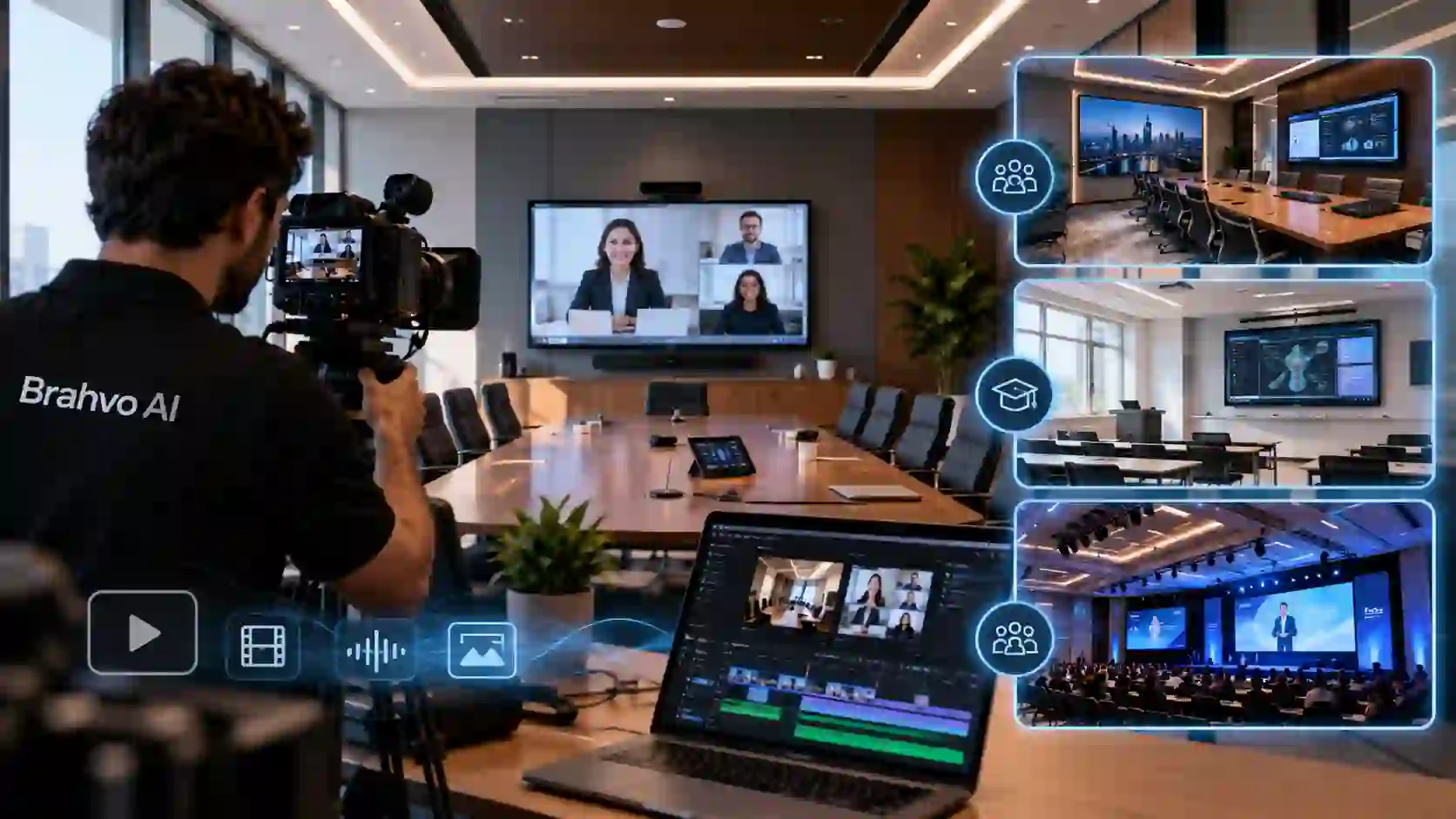
AV integration companies often sell solutions that are difficult to explain in a sales meeting. A conference room might include multiple displays, ceiling microphones, audio processors, control panels, video conferencing systems, and automated lighting. Each component serves a purpose, but buyers rarely want to spend an hour learning how every device connects. They want to know whether the finished system will solve their problems.
This is where video production services for AV integrators become useful. Instead of asking a sales representative to explain every technical detail, an AV integrator can use video to demonstrate how the system works, what users can expect, and why the installation makes sense for a particular environment.
For US based AV integration companies, this matters across several markets. Corporate offices need reliable meeting rooms. Schools want technology that teachers can operate without technical assistance. Healthcare facilities may require specialized communication systems, while hotels and event venues need dependable audio and visual experiences.
Each buyer has different priorities. A facilities director might care about room availability and ease of maintenance. An IT manager may focus on network compatibility, security, and device management. An executive might simply want meetings to start on time without someone troubleshooting the equipment.
A well produced video can address these concerns before the first technical consultation.
Generic promotional videos rarely do this well. AV integrators need content that reflects real installation environments, explains technical functions clearly, and connects system capabilities to business requirements. Brahvo AI can support this process through AI assisted video production, helping companies create explanatory content, product demonstrations, and project focused videos for different audiences.
The objective is not to make AV technology look complicated or futuristic. It is to make a complex solution easier to understand and easier to evaluate.
A large AV integration project involves more than installing equipment. It requires coordination between technology vendors, IT teams, architects, electrical contractors, facilities managers, and end users. Misunderstandings can appear long before installation begins.
Consider a corporate office building that needs twenty conference rooms with standardized video conferencing systems. The project team must understand the room configurations, display requirements, microphone coverage, camera positioning, control interfaces, and expected user experience. Explaining every configuration through separate emails and technical drawings can become difficult.
Video production services for AV integrators provide another way to communicate the proposed solution.
A short system overview can show how a typical conference room operates. A technical explainer can illustrate the signal flow between cameras, microphones, processors, displays, and conferencing equipment. An installation walkthrough can demonstrate how different room types fit into the wider project.
These videos do not replace engineering documentation, system drawings, commissioning procedures, or technical specifications. Their role is to help people understand the information that those documents contain.
Helping stakeholders understand the system before installation
Early communication is especially valuable when decision makers are not AV specialists. A procurement manager might approve the budget, while an IT director evaluates the network requirements and employees eventually use the system.
A visual explanation gives these stakeholders a shared reference point.
For example, a video showing a meeting room from the user's perspective could demonstrate how a participant starts a call, shares a laptop screen, adjusts the camera, and switches between meeting sources. The same video could briefly explain what happens behind the scenes without overwhelming the viewer with technical terminology.
This approach can also support project proposals. An AV integrator can use a short video to communicate the intended experience before a client commits to a major installation.
There is one important limitation. If the design changes after the video is produced, the content may become outdated. System diagrams, device names, and interface demonstrations should therefore be reviewed by the project engineer before publication or client delivery.
Supporting handoffs between technical and nontechnical teams
An AV project often moves through several stages, from sales and design to installation, testing, and ongoing support. Each handoff creates an opportunity for information to be misunderstood.
Video content can help explain what the client has purchased, how the finished system is intended to operate, and what users should expect during the transition.
For AV integrators managing several projects at once, a repeatable video production process can reduce the effort required to explain familiar concepts repeatedly. The greatest value comes when content is planned around actual project questions rather than produced simply to fill a marketing calendar.
Product demonstrations are among the most practical uses of video production services for AV integrators. Commercial AV systems are easier to evaluate when buyers can see the equipment working together instead of reading a list of technical specifications.
A display with a high resolution specification does not tell a buyer how clearly a presentation will appear in a brightly lit boardroom. A microphone's technical specifications do not necessarily communicate how it performs during a meeting with several participants. A control processor's feature list does not show how simple the room will be to operate.
Video bridges this gap.
A useful demonstration begins with a specific question. Can the room switch between local presentations and remote meetings without requiring a technician? Can a presenter share content while maintaining a video conference? Can the user control several devices from one interface?
The video should answer that question directly.
Examples of AV demonstration content
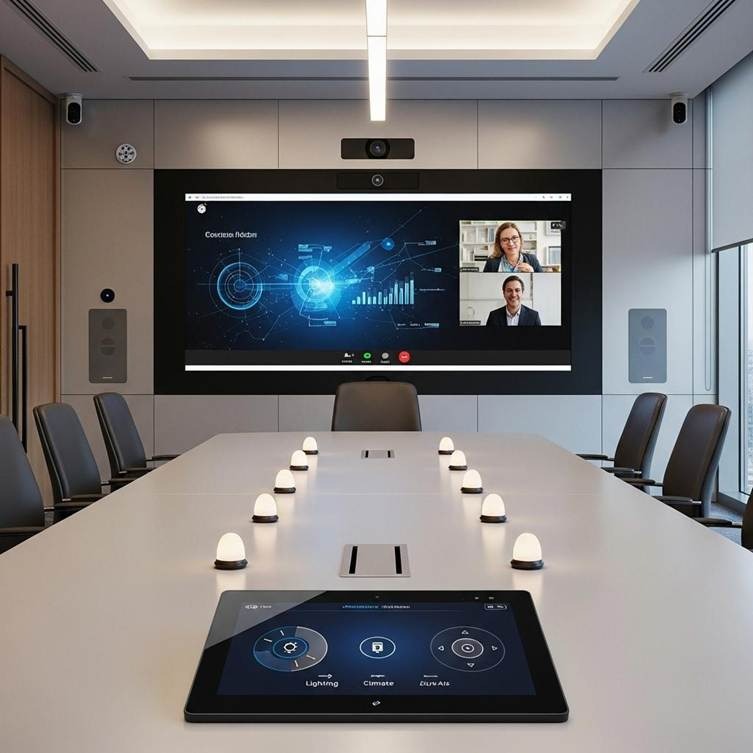
Conference room control systems
Show a user starting a meeting, selecting a source, adjusting room settings, and ending the session. Keep the focus on the experience rather than the number of connected devices.
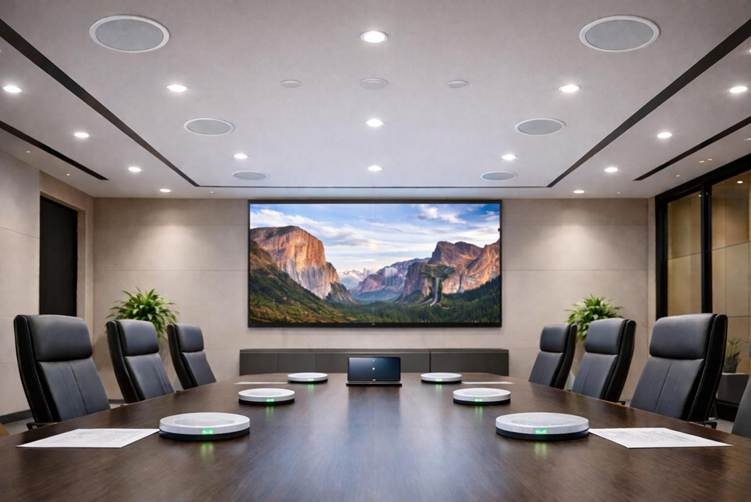
Audio and microphone systems
Explain microphone placement, room coverage, and how the system supports communication. Any audio comparisons should use consistent recording conditions.
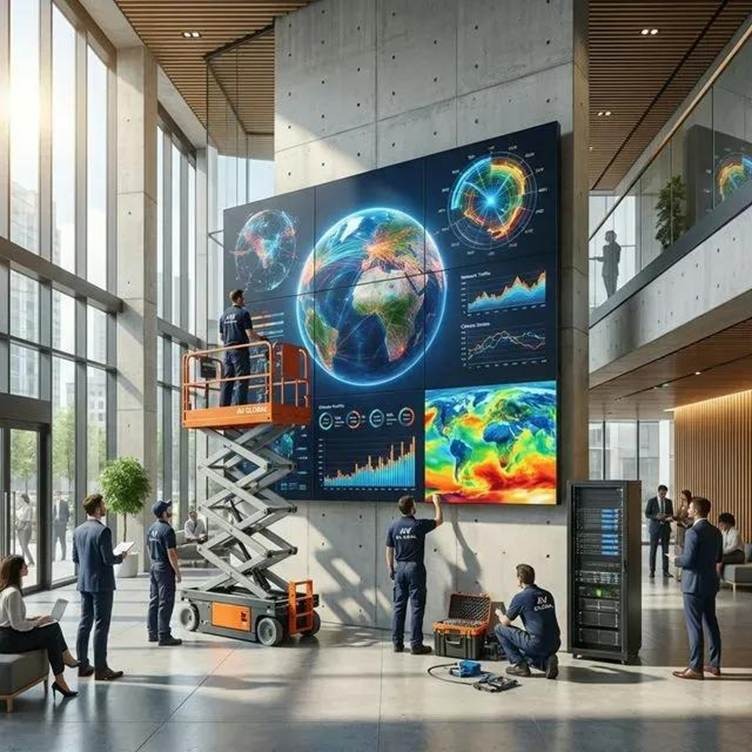
Digital signage installations
Demonstrate how displays present announcements, schedules, promotional material, or other approved content in a commercial environment.
Demonstrate the outcome, not just the equipment
A product demonstration should connect the system's technical capabilities to a situation the buyer recognizes. Showing a rack full of hardware may appeal to an engineer, but a facilities director is more likely to respond to a demonstration of a room that works reliably throughout the day.
That does not mean removing technical detail. Instead, technical information should appear at the right moment.
A video about a multiroom audio system could begin with the intended user experience, explain how zones are controlled, and then introduce relevant equipment. This sequence gives the audience a reason to care about the specifications.
AV integrators should also distinguish between a conceptual demonstration and footage of a real installation. If an AI generated scene illustrates a proposed room, it should not be presented as a photograph of a completed client project. Equipment appearance, ports, user interfaces, and performance claims require particular care.
Brahvo AI can help AV integration businesses produce explanatory and demonstration content with AI assisted production methods. The right workflow depends on whether the video requires authentic equipment footage, screen recordings, animation, narration, or a combination of these elements.
An AV integrator may have a technically sound solution and still struggle to communicate its value. This is common when the proposal contains specialized terminology that means little to someone outside the industry.
Terms such as digital signal processing, networked AV, control integration, echo cancellation, and room scheduling describe important functions. But a buyer evaluating a new office meeting space may not know which functions matter most.
Video production services for AV integrators can translate these concepts into practical explanations.
Take networked AV as an example. A technical presentation might describe how audio and video signals travel across an IP network. A buyer focused on the finished workspace may be more interested in how the system supports communication between rooms, how devices are managed, and what infrastructure the installation requires.
Both perspectives matter. The video should connect them.
Match the message to the person making the decision
Different audiences need different levels of detail. Trying to address all of them in one video often creates a piece that is too technical for executives and too shallow for engineers.
A more practical approach is to create a set of related videos around the same solution.
These videos can share some footage and visual elements while using different narration and levels of technical detail.
Give sales teams content they can actually use
A video becomes more useful when it supports a specific sales conversation. A short explanation of room control might be sent after a discovery call. A product demonstration could accompany a proposal. A system overview might help a client introduce the project to internal stakeholders who were not present at the original meeting.
This requires coordination between the sales and production teams.
Sales representatives should identify the questions that repeatedly delay decisions. The content team can then produce videos that address those questions clearly. If prospects keep asking how several rooms will work together, a single equipment focused video is unlikely to resolve the concern.
The same principle applies to website content. A video placed on a relevant solution page should help visitors understand the service described on that page. Its subject, narration, and call to action should align with the visitor's likely next step.
Brahvo AI can support the production of these sales focused videos, particularly when an AV integrator needs several versions of a core message for different audiences or channels.
For many AV integration companies, video production competes with other priorities. The marketing team may be small, technical staff have limited time, and project managers cannot spend hours preparing footage for every installation.
This creates a familiar problem. The company has useful expertise, interesting projects, and a broad range of solutions, but its video library remains small.
AI assisted production can help address the workload, especially when the content relies on explanations, animation, narration, and reusable visual elements rather than extensive filming.
Video production services for AV integrators can use these methods to produce more content from a clearly defined set of source materials. An existing product presentation, approved system diagram, technical document, or recorded demonstration may provide the starting point for an explanatory video.
The production process still requires technical review. AI can assist with presenting information, but it cannot automatically establish that a proposed configuration is compatible, that a specification is correct, or that a depicted product behaves as shown.
Where AI video production is most useful
AI assisted workflows are particularly practical for content that needs frequent revisions or several variations.
For example, an AV integrator might need a series of short videos covering conference room systems, digital signage, classroom technology, and corporate training spaces. Each video may follow a consistent visual format while addressing different customer requirements.
AI assisted scripting, narration, scene development, and editing can help manage this volume. The team can spend more time checking the technical details and less time rebuilding every production element from scratch.
There is also an opportunity to repurpose content. A longer system demonstration can provide material for shorter clips, sales presentations, website sections, and social media posts. Each version should have a clear purpose rather than being shortened without considering its audience.
A practical example of scaling video content
Consider a hypothetical AV integration company that serves offices, universities, and hospitality businesses across the United States. It has a library of approved installation photographs, product footage, and technical presentations, but it rarely produces videos because every new project requires a fresh production effort.
The company decides to create six videos around its conference room offering.
One explains the overall system. Two focus on room control and video conferencing. Another addresses network and device management. The remaining videos demonstrate the user experience and explain common planning considerations.
The team reuses appropriate footage, develops separate scripts, and asks its technical staff to review the claims before publication. AI assisted production helps prepare the different versions without requiring a completely new filming schedule for each one.
The benefit is not an automatic increase in sales. It is a more useful library of content that the sales team can share at different stages of a buying conversation.
This approach may not work as well for every project. An installation with unusual architecture, proprietary interfaces, or a highly specific equipment configuration may require original filming and close technical direction. In those cases, AI is better treated as part of the production process rather than a substitute for authentic footage.
Keeping production efficient without losing technical accuracy
AV integrators should establish a review process before producing content at volume. Product names, connection diagrams, compatibility statements, network requirements, and performance claims should be checked by someone who understands the installation.
It is also worth maintaining approved source material. When equipment changes or a product reaches the end of its lifecycle, the team needs to know which videos contain outdated information.
Brahvo AI can support AV integrators that want a repeatable process for creating technical explainers, product demonstrations, and sales videos. The production approach should reflect the actual content requirements, the available source footage, and the amount of technical detail the intended audience needs.
Producing twenty videos is not automatically better than producing five. The real question is whether the content helps a buyer understand a solution, gives the sales team something useful to share, or answers a question that would otherwise require another meeting.
An AV integration company can install an excellent system and still struggle to show prospective customers what makes its work valuable. The equipment list might be impressive, but buyers usually want to understand how the technology will function in their own environment.
This is why video production services for AV integrators should reflect the spaces where the technology will actually be used. A corporate boardroom, a university lecture hall, and a hotel conference facility may all require displays, audio equipment, microphones, and video conferencing capabilities. Their operational needs, however, are quite different.
A boardroom video might demonstrate how executives start a meeting, share presentations, and communicate with remote participants. A classroom video could focus on how an instructor switches between presentation materials, classroom displays, and remote learning content. For a conference venue, the emphasis might be on connecting multiple presentation sources and supporting different event configurations.
The content becomes more relevant when viewers can recognize their own working environment in the demonstration.
Corporate boardrooms and executive meeting rooms
Corporate buyers often care about meeting reliability, ease of use, and compatibility with existing workplace technology. They may not need an explanation of every device in the room, but they do need to understand how the components work together.
Video production services for AV integrators can demonstrate the complete meeting experience, from entering the room and starting a call to presenting content and finishing the session. Short explanations can show how room control, microphones, cameras, displays, and conferencing equipment contribute to that experience.
For a large enterprise, separate videos can address standard meeting rooms, executive boardrooms, and larger collaboration spaces. This helps buyers compare room configurations without forcing every requirement into a single presentation.
Classrooms and educational facilities
Educational environments introduce a different set of priorities. Instructors need technology they can operate with minimal disruption, while IT teams need to understand how devices will be managed and supported.
A useful classroom video might show an instructor presenting from a laptop, switching between visual sources, and using the room's audio system. A separate technical explanation could cover display placement, microphone coverage, or the relationship between classroom equipment and the institution's existing infrastructure.
The emphasis should remain on realistic classroom use. An animated classroom filled with generic equipment will not help a university evaluate a specific installation unless the visuals accurately represent the proposed system.
Conference centers, hotels, and shared meeting spaces
Conference facilities often need flexible configurations because different customers use the same rooms for different purposes. A space may host a training session in the morning, a business presentation in the afternoon, and a hybrid meeting later in the day.
Video can show how the AV system supports those different arrangements. It can also explain how event staff operate the equipment and which tasks require technical assistance.
For AV integrators, this type of content can make proposals easier to understand before the customer commits to an installation. It gives stakeholders a clearer sense of the intended experience, provided the demonstration accurately reflects the planned configuration.
Brahvo AI can support the production of these videos through AI assisted narration, visual development, editing, and reusable content formats. The choice between generated visuals, animation, and authentic installation footage should depend on how much the buyer needs to see the actual equipment in operation.
AV integration businesses face a particular content problem. Their work is technical, project specific, and often dependent on equipment installed at client locations. Producing useful video content requires more than placing a camera in a meeting room and recording what happens.
Several practical issues can make the process difficult.
Technical information is difficult to communicate clearly
An AV engineer may understand a system's signal path, network configuration, and control logic immediately. A procurement manager or office administrator may not.
When a video uses too much technical language, viewers can lose the main point. When it removes too much detail, technically informed buyers may question its usefulness.
The answer is not to make every video simple in the same way. Instead, the level of detail should reflect the intended audience. A short overview can explain the problem and the intended outcome, while a separate technical video can address compatibility, infrastructure, and configuration.
Authentic footage is not always available
AV installations often take place in occupied offices, educational facilities, hospitals, and other environments where filming may be restricted. Client confidentiality, security policies, employee privacy, and installation schedules can all limit access.
Even when filming is permitted, the room may not be ready for a polished demonstration. Equipment could be partially installed, cabling might remain exposed, or the final control interface may not yet be configured.
Video production services for AV integrators need a practical plan for these situations. Approved product footage, diagrams, animation, and carefully developed AI visuals can help explain concepts when real footage is unavailable. They should not be presented as authentic photographs of a completed installation.
Producing content for every solution becomes expensive
An AV integrator may serve several industries and offer dozens of system configurations. Filming a separate video for every product, room type, and customer segment can become difficult to manage.
A more workable method is to identify content that can be reused without losing technical accuracy. A general explanation of room control may support several related videos, while the specific equipment demonstration and configuration details remain separate.
This approach requires planning. Reusing the same visuals indiscriminately can make videos feel repetitive or create confusion when different systems have different capabilities.
Marketing and engineering teams may have different priorities
Marketing teams want content that holds attention and explains value quickly. Engineering teams want the details to be accurate. Sales teams want something that helps answer buyer questions.
These goals can conflict when nobody agrees on the video's purpose before production begins.
A short review process can prevent much of this friction. The marketing team establishes the audience and message, the technical team checks the claims and visuals, and sales confirms that the finished content addresses a real customer concern.
There is a tradeoff here. A longer approval process can delay publishing, but releasing an inaccurate video can create a much bigger problem, particularly when the content discusses compatibility or promised system capabilities.
AV integration companies need production support that accounts for the subject matter, not just the final video format. A product demonstration, an animated technical explainer, and a corporate introduction each require different source materials and different levels of review.
Brahvo AI can approach video production services for AV integrators by starting with the communication problem the video needs to solve.
For example, a company may want to explain a complex conference room installation to a nontechnical buyer. Another may need short product videos for a new range of commercial displays. A third may want to repurpose existing presentations and approved footage into a series of sales assets.
These projects should not automatically follow the same production process.
Start with the audience and the technical source material
The first task is to establish what the viewer needs to understand. The team should identify the relevant solution, the buyer's likely questions, and the action the video is intended to support.
Source materials might include approved product images, installation photographs, technical diagrams, presentations, screen recordings, and written specifications. The quality of these materials affects what can be produced accurately.
If the source material does not explain how a system operates, that gap should be resolved before the video is created. Generating attractive visuals cannot compensate for missing technical information.
Choose the right production method
AI assisted video production can be useful for narration, visual sequences, animation, editing, and producing multiple versions of a core message. Authentic footage remains important when buyers need to see actual equipment, physical connections, real installation conditions, or a specific interface in operation.
A project might combine both approaches. Real product footage could establish credibility, while animation explains how signals move through the system. Narration can connect the two without requiring the audience to interpret a complicated diagram on its own.
Brahvo AI can help organize these elements into content intended for websites, sales presentations, product pages, and paid advertising, depending on the project's requirements.
Build a repeatable review process
For technical content, review is part of production rather than a final formality. Product names, interface details, compatibility claims, and configuration information should be checked against approved documentation.
The review process should also establish which visuals are illustrative and which depict actual equipment. That distinction matters when an AV integrator is using a video during a proposal or procurement discussion.
Produce variations with a clear purpose
An AV integration company might need a longer system overview for its website, a shorter explanation for a sales email, and a product demonstration for a specific buyer segment.
Brahvo AI can support this type of content development when the source material and production requirements allow it. The goal is to make each version useful in its intended setting, not simply to create more versions of the same video.
The best starting point is often one recurring question that the sales team answers repeatedly. If a video can answer that question clearly and accurately, it has a practical purpose before it ever reaches a marketing channel.
Video views are easy to count. Their commercial value is harder to establish.
An AV integration company might publish a product demonstration that attracts relatively few views but helps several qualified prospects understand a proposed system. Another video might receive more attention from a general audience without generating meaningful sales conversations.
The right measurement depends on why the video was produced.
For video production services for AV integrators, the useful question is not simply how many people watched the content. It is whether the content helped the business communicate with the right buyers, answer questions, or move a relevant opportunity forward.
Measure performance against the video's purpose
A video created to explain a technical solution should be evaluated differently from one designed to attract new prospects.
Useful measures include:
These measures should be interpreted together. A high completion rate does not automatically indicate purchase intent, and a low view count does not prove that a video lacks commercial value.
Connect video engagement with actual sales activity
Consider a hypothetical AV integrator that produces a three minute video explaining its standard conference room solution. The sales team begins sharing it with prospects after initial discovery calls.
Over the next few months, the company tracks how often the video is shared, whether recipients watch it, and what questions arise during follow up conversations. It also records whether the video appears in opportunities that progress to technical assessments or proposals.
This does not establish that the video caused a sale. Project size, pricing, customer requirements, procurement timing, and many other factors influence the decision.
However, the information can help the company determine whether the video is useful enough to maintain, revise, or adapt for another audience.
Evaluate the production cost realistically
AI assisted video production may reduce some repetitive production work, but it still involves scripting, source material preparation, technical review, revisions, and ongoing maintenance.
An AV integrator should consider the full cost of creating and maintaining the content rather than comparing production prices alone. A low cost video that contains incorrect technical details can become expensive if it confuses prospects or needs to be replaced.
The same applies to budget allocation. If a particular video repeatedly supports relevant sales conversations, it may deserve further investment. If another attracts attention but rarely reaches the intended audience, the company may need to reconsider its subject, distribution, or message.
For Brahvo AI and its AV integration clients, meaningful measurement begins with a clear purpose for each video and a practical way to assess whether that purpose is being met.
1. What are video production services for AV integrators?
Video production services for AV integrators involve creating video content that explains audiovisual systems, demonstrates equipment, presents installation capabilities, and communicates technical solutions to prospective customers. Content may include product demonstrations, system explainers, project videos, training material, and sales presentations.
2. Why do AV integration companies need specialized video content?
AV systems can be difficult to explain through product specifications and written proposals alone. Specialized video content shows how equipment works together and helps buyers understand the intended user experience before making a purchasing decision.
3. Can AI video production work for technical AV products?
Yes, provided the production process includes reliable source material and technical review. AI assisted methods can support narration, animation, editing, and explanatory visuals. Actual product demonstrations may still require authentic footage to show specific equipment and interfaces accurately.
4. How much do video production services for AV integrators cost?
Costs depend on the length of the video, production method, number of versions, source footage, animation requirements, and review process. A simple narrated explainer generally requires a different level of work from a detailed installation demonstration involving several filming locations.
AV integrators should request pricing based on the actual deliverables rather than video length alone.
5. What types of videos should an AV integration company produce first?
Start with a recurring customer question or a solution that sales representatives frequently explain. A conference room demonstration, system overview, or explanation of a specific integration challenge can provide a useful starting point. The best choice depends on the company's sales process and target customers.
6. Can video content help AV integrators win larger projects?
It can support larger project opportunities by helping stakeholders understand proposed systems and communicate the requirements internally. However, video alone cannot establish technical suitability, pricing competitiveness, implementation capability, or procurement approval.
7. How long should an AV integration video be?
There is no single ideal length. A short overview may work well for an initial introduction, while a detailed technical demonstration may need several minutes or more. The video should be long enough to answer its intended question without adding unnecessary detail.
8. Can one video be used across websites, email, and paid advertising?
Often, but the content may need different edits. A website video can provide a detailed explanation, while a sales email may benefit from a shorter version. Paid advertising usually needs a clear opening and a focused message that works for viewers who have little prior knowledge of the company.
9. How can Brahvo AI support video production services for AV integrators?
Brahvo AI can support AI assisted video production for technical explainers, product demonstrations, narrated content, and variations created for different audiences. The specific production method depends on the source materials, the need for authentic equipment footage, and the technical detail the video must communicate.
10. What should an AV integrator prepare before starting a video project?
Prepare the intended audience, the main message, approved product information, available footage, technical diagrams, and any relevant brand guidelines. Identify a technical reviewer who can confirm that the equipment, configuration, and performance claims are accurate. This preparation helps prevent avoidable revisions later.