Find the best video production services for construction companies to showcase projects, build trust, attract clients and support lead generation.
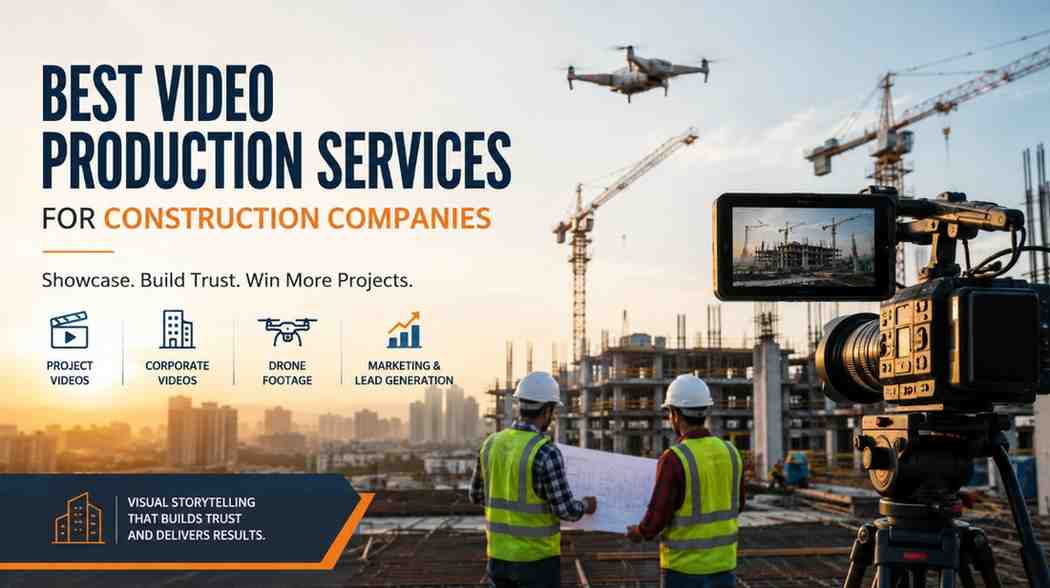
Construction is one of those industries where the actual work is often far more impressive than what a website can explain in words.
A contractor may have completed a 20-storey commercial building, a large industrial shed, a residential township, a hospital project or a highway package, but if the website only has a few photographs and two paragraphs about the company, a potential client may never understand the scale of that work.
This is where the best video production services for construction companies become useful.
Construction companies deal with a slightly difficult marketing problem. Their work is physical, technical and spread across months or sometimes years. A customer does not always get to see what happens at the site. An investor may only see drawings and financial documents. A corporate client may compare several contractors without visiting every project location.
A well-made video can bring that site to the screen.
For example, imagine a construction company in Pune that has completed a large industrial facility. Instead of simply writing that the company handles industrial construction, a project video can show the empty site, foundation work, structural installation, machinery placement, finishing and the completed facility. Even if the viewer spends only two minutes watching it, the company has communicated something that several pages of website copy may struggle to explain.
That matters for trust.
I have also seen construction businesses make the opposite mistake. They record everything on a phone, put together random clips with loud music and call it a project video. The site may be excellent, but the video makes the company look less professional than it actually is. This is particularly noticeable when the target customer is a corporate procurement team or an institutional buyer.
The problem is not always the camera.
It is usually the lack of planning around what the video needs to communicate.
The best video production services for construction companies are not simply about recording attractive buildings. They should capture the work in a way that answers the questions a potential client is already asking.
Who completed this project?
What type of construction work do they actually handle?
How large was the project?
What was technically difficult?
What did the finished project look like?
Can this company handle something similar for us?
A good construction video can answer several of these questions without making the viewer read through a long company profile.
There is another reason video has become more important for construction companies. The decision making process has changed. People still ask for proposals, drawings, cost estimates and technical documents, but the first impression often happens online. A builder, developer or infrastructure contractor may be searched on Google before a meeting is even scheduled.
If the company has a useful project video on its website, YouTube channel or social media profile, the potential client gets another way to judge its experience.
For Indian construction companies, this can be especially valuable because the range of work is enormous. A company working on warehouses in Gujarat communicates differently from a residential builder in Bengaluru. An EPC contractor working on solar infrastructure needs a different visual treatment from an interior contractor handling premium offices in Delhi.
There is no single construction video format that works for all of them.
That is something I feel construction companies should take more seriously. A generic corporate video with a managing director speaking in front of a glass office may look polished, but it does not necessarily prove construction capability. Show the site. Show the engineers. Show the drawings being reviewed. Show the safety process. Show the equipment where relevant. Show the finished work.
Real evidence is usually more convincing than decoration.
Video can also help during sales discussions. A business development team can share a relevant project video with a prospect before a meeting. If the prospect is interested in industrial construction, show industrial work. If the company wants to win a hospital project, show healthcare related construction experience where permissions allow it.
That makes the video a sales asset rather than just another marketing file sitting on the website.
The best video production services for construction companies should therefore be viewed as part of the company's communication process. They can support website content, social media, presentations, tender discussions, client meetings, recruitment and even internal communication.
Not every video needs to generate a lead directly.
Sometimes its job is simply to make the next conversation easier.
Construction video production has its own practical challenges. A normal corporate shoot can often be planned around an office, a conference room and a few interviews. A construction site is different.
There is dust. There is machinery. There are safety restrictions. Workers are moving around. Weather can change. Certain areas may not be accessible. Some projects are active for only a limited period before the next stage begins.
So the best video production services for construction companies need to understand the environment before the camera starts rolling.
This is where experience becomes visible.
A production team should ideally understand what is worth capturing at a construction site. A random wide shot of workers walking around does not tell much. A carefully framed shot showing reinforcement work, structural assembly or specialised equipment can communicate technical capability much better.
The same applies to interviews.
A managing director saying, "We are committed to quality and timely delivery," is not particularly memorable. Almost every construction company can say that.
But if the project manager explains why a particular foundation system was selected, or how the team managed a difficult site condition, the viewer learns something real about the company.
That is much stronger.
The best video production services for construction companies should also think about the audience before deciding the format. A developer, architect, industrial buyer, government department and homebuyer do not look at construction in exactly the same way.
A commercial real estate developer may care about project scale, delivery timelines and execution capability. An industrial client may be more interested in technical coordination, safety and machinery installation. A residential customer may care more about workmanship, design and the finished environment.
The same company may need different videos for each audience.
There is also the question of visual continuity. Construction projects change quickly. If a team starts recording only after the structure is almost complete, a lot of the story has already disappeared.
I generally prefer companies to think about video much earlier in the project.
Capture the early stage. Capture important milestones. Capture technical work when it is visible. Then return for the final walkthrough.
This creates a proper project story instead of a collection of pretty photographs.
Drone footage can be useful too, particularly for large sites, townships, industrial facilities, roads and infrastructure projects. But drone footage should not become the entire video. I have seen videos where almost every shot is taken from the air. It looks impressive for the first few seconds and then becomes repetitive.
People also need to see the human side of construction.
Engineers checking drawings. Supervisors inspecting work. Teams coordinating activities. Workers following safety procedures. Materials being handled properly. A client walking through the completed facility.
These small details make the project feel real.
There are technical considerations as well. Construction sites can be noisy, so recording interviews without proper microphones can result in unusable audio. Bright sunlight can create harsh footage. Indoor industrial spaces can have poor lighting. A production team that has not planned around these conditions may return with footage that looks fine on the camera screen but performs badly in the final edit.
That is why equipment alone does not define the best video production services for construction companies.
Planning does.
Storytelling matters too. The video should have a reason for every major sequence. If the company is presenting a completed warehouse, perhaps the story starts with the client's requirement, moves through planning and execution, shows the difficult stages and ends with the completed facility.
If it is an infrastructure project, the story might focus more heavily on scale, site conditions, engineering and progress.
There should be some thought behind the sequence.
I would also be careful with overproduced construction videos. Too much cinematic music, slow motion and dramatic editing can make a straightforward project feel artificial. Construction clients are generally not looking for a movie trailer. They want confidence that the company knows what it is doing.
That does not mean the video should be boring.
It means the visual style should serve the work.
StratMarketer can approach construction video content with this distinction in mind. Instead of treating every project as another corporate shoot, the focus can remain on the company's actual capabilities, project experience and the questions potential customers are likely to have.
One thing I would question here is the assumption that expensive production automatically means better construction marketing. I might be wrong in some cases, especially for large national brands, but a well-planned ₹2 lakh project video can sometimes communicate more effectively than a very expensive production filled with generic visuals.
The difference is usually in the story and the relevance of the footage.
And sometimes the best shot is not the most beautiful one.
It is the one that proves something.
Construction projects are difficult to explain because much of the important work is invisible after completion.
Once a building is finished, nobody sees the foundation excavation, reinforcement, waterproofing, structural coordination, electrical planning or hundreds of small decisions that happened before handover.
A project video can bring some of that process back into view.
This is particularly useful when the construction company works in technically demanding areas. Industrial projects, warehouses, hospitals, infrastructure developments, manufacturing facilities and large commercial buildings can involve processes that are difficult for a non-technical viewer to understand.
The video does not need to turn into an engineering lecture.
It simply needs to show the right things.
For instance, suppose an Indian construction company has developed a manufacturing facility for an engineering business. A normal completed-project photograph might show the exterior of the building. That tells the viewer very little about the company's actual capability.
A project video can show the initial site condition, foundation activity, structural framework, roofing, internal development, equipment installation and final facility.
Now there is context.
The viewer understands that the company did not simply construct a building. It managed multiple stages of a complicated project.
This is one of the strongest uses of the best video production services for construction companies. They can turn technical work into something that a business decision maker can understand without requiring them to study drawings.
The narration also matters.
Instead of saying, "We provide end-to-end construction solutions," the voiceover could explain what was actually done.
"The project involved construction of a 1,50,000 square foot manufacturing facility, including structural work, roofing, internal civil work and coordination with the client's machinery installation team."
That sentence gives the viewer something concrete.
Specificity builds credibility.
The same approach works for residential construction. A developer can show the progression from land development to structural construction, facade work, common areas and finished apartments. If the project is still under construction, progress videos can be created at important milestones.
These videos can also help sales teams.
A prospective buyer who cannot visit the site immediately may get a much better sense of progress from a properly filmed update. For a large township, regular video documentation can show roads, landscaping, amenities and construction progress over time.
But there is a practical issue here. Construction companies sometimes want to show every single stage in one video. That usually creates a very long piece that nobody watches till the end.
It is often better to create smaller videos around specific questions.
One video can explain the project.
Another can focus on construction progress.
Another can explain a technical feature.
Another can feature the project manager.
Another can show the finished site.
That gives the company a useful library of content instead of one oversized corporate video.
For example, a construction company working on solar infrastructure could create a project film showing site preparation, module installation, structural work, electrical connections and commissioning. A separate short video could explain the challenges of working on the site. Another could feature the engineering team.
This is much more useful than publishing the same generic company introduction repeatedly.
There is also an important distinction between documenting a project and marketing it.
Documentation asks, "What happened?"
Marketing asks, "Why should the viewer care?"
The strongest construction project videos do both.
A project manager might explain that the site had difficult soil conditions. The footage can then show the relevant work. A client representative might talk about coordination. The video can show the teams working together. Suddenly the technical detail has meaning.
I have always preferred this approach because it does not require the company to make exaggerated claims. The project itself becomes the evidence.
There will be cases where certain project details cannot be shown because of client confidentiality, security restrictions or contractual limitations. That is normal. A production team should know this before filming, not after the editor has spent three days building the entire sequence around restricted footage.
This may sound like a small production issue, but it can become irritating very quickly.
Permissions also matter when workers or clients appear on camera. Construction companies should have a clear understanding of what can be recorded and where the footage will be used, particularly on large industrial and infrastructure sites.
The best video production services for construction companies should account for these realities from the beginning.
The finished video also needs to work beyond the website. A horizontal project film may be ideal for a website or presentation, while shorter vertical clips can be created for social platforms. A few useful clips can come from the same shoot without making the company repeat the entire production process.
That is where a single construction project can become a long-term content asset.
Still, I would not turn every piece of construction footage into social media content just because it is available. Some clips are better left unused. Not every machine movement needs a reel.
There should be a little restraint.
A good construction video makes complicated work easier to understand without making it look simpler than it really was. That balance is difficult, and honestly, it takes judgement more than equipment.
Sometimes the footage is excellent, the editing is clean, the narration is fine, and yet something still feels missing. Usually it is because the video never answered the one question the potential client actually had.
That part is easy to overlook.
Construction is a trust heavy business. Before a client gives a company a project worth several lakhs or crores, they want some proof that the company can actually deliver what it is promising.
A corporate video can help with that, but only when it shows something genuine.
The usual format is familiar. Managing director speaks to the camera, company history appears on screen, a few buildings are shown, employees shake hands and the video ends with a statement about quality and commitment. There is nothing technically wrong with it. The problem is that almost every construction company can produce something similar.
The better corporate videos show the evidence behind the claims.
If a construction company says it has 15 years of experience, show the projects completed during those years. If it works across industrial and commercial construction, show both. If the company has experienced engineers and project managers, let some of them explain their work instead of simply displaying their names in a graphic.
That makes a difference.
The best video production services for construction companies should therefore treat the corporate video as a credibility piece rather than a company introduction alone.
For investors, the requirements can be slightly different. They may want to understand the scale of operations, project pipeline, execution capability, management team and the type of clients the company has worked with. A video cannot replace financial or technical due diligence, obviously, but it can provide useful context before a formal discussion.
For example, a construction company seeking an investor for expansion could show its completed industrial projects, equipment, teams, active sites and management approach. The investor gets a more tangible picture of the organisation.
I have seen companies make one mistake here repeatedly. They try too hard to look big.
They use stock footage of skyscrapers in Dubai or Singapore, even though their actual work is in tier two Indian cities. It may look attractive, but a serious client notices the disconnect. If the company is based in Jaipur and specialises in warehouses, factories and commercial buildings, there is nothing wrong with showing exactly that.
Real work is more convincing.
Client testimonials can also be included, especially when the client is willing to speak specifically about the experience. "Good service and excellent quality" does not say much. A client explaining how the construction team handled a deadline issue or coordinated with another contractor is much more useful.
Specific experiences carry weight.
The video should also reflect the company's actual personality. A family owned construction business may not need to imitate a multinational corporation. A large infrastructure contractor may require a more formal presentation. A young construction technology company may have a completely different visual style.
There is no reason all of them should look identical.
For StratMarketer, this is where video strategy can connect with broader digital marketing work. The corporate film can sit on the website, while shorter sections can support social media, presentations, YouTube and sales communication.
One production can create several useful pieces when planned properly.
But I would still avoid turning the corporate video into a collection of everything the company has ever done. It becomes tiring. Sometimes leaving out a project is better than forcing it into the story.
A good corporate video should leave the viewer thinking, "They seem to know their work."
That is enough.
Construction sites are naturally visual, which is one reason video works so well for this industry.
A large site viewed from the ground can sometimes be difficult to understand. A drone shot can immediately show the overall scale, location, site layout and progress. This is particularly useful for highways, townships, industrial parks, warehouses, solar projects, bridges and large commercial developments.
But drone footage should have a purpose.
Aerial footage is not automatically better footage.
I have seen construction videos where the camera spends almost the entire first minute flying over the site. The shots are technically impressive, but after a while the viewer has no idea what they are looking at.
Aerial footage works best when combined with ground level footage.
The drone can establish the scale of the project. Ground footage can then show the people, equipment and actual work taking place. Close shots can capture details that would be invisible from the air.
This combination makes the project easier to understand.
The best video production services for construction companies should also consider the stage at which the site is filmed. A completed project may look excellent, but filming only at completion means the viewer never sees how the company handled the difficult parts.
For long duration projects, visual documentation can be planned around milestones.
Foundation completion.
Structural work.
Roofing.
Facade.
Internal work.
Services installation.
Final finishing.
Handover.
The exact milestones depend on the project, of course. There is no point creating a fixed filming calendar and following it blindly when the construction schedule changes every few weeks.
Weather creates another issue. A site filmed on a bright winter morning may look completely different during monsoon. In many parts of India, this matters. Mud, waterlogging and cloudy conditions can affect access and visual quality, but sometimes that footage is actually useful because it shows the real site conditions.
Not everything needs to look perfect.
Safety is another serious consideration. Drone operators and camera crews should not interfere with site operations. PPE requirements, restricted zones and client permissions need to be respected. A production team should not ask workers to repeat an activity simply to get a better camera angle.
That is not worth the risk.
Visual documentation can also become useful internally. Construction companies can maintain video records of project progress, difficult site conditions or completed stages. These records may help during client discussions and progress reviews.
There is a quieter benefit as well. A company with years of well organised project footage has a much stronger content library than one that starts searching for photographs every time a tender presentation is required.
The difference becomes obvious after a few years.
Instead of saying, "We have completed many projects," the company can show them.
Drone footage also works particularly well in before and after videos. A large plot before development can be compared with the completed project. This gives viewers a visual understanding of the transformation without relying on exaggerated language.
Of course, drone filming must follow applicable aviation and site permissions. Construction companies should not assume that a drone can simply be flown anywhere because the location is private.
That part should be checked before production.
Video does not magically create construction leads.
I want to make that clear because some agencies make it sound as if uploading a project video will suddenly fill the sales pipeline. Construction sales usually take time. The project value is high, decision makers are cautious and several people may be involved before a contract is signed.
But video can support the process at several points.
A potential client may first find a construction company through Google. They visit the website and start looking at completed projects. A useful project video gives them something more convincing to consume than a page full of claims.
Then they may check the company's LinkedIn profile or YouTube channel.
They may share a video internally.
A sales person may send the same video over WhatsApp before a meeting.
The client may watch it while comparing two or three contractors.
This is how video often contributes to lead generation. Not always directly, but by helping the company look credible during the decision process.
The best video production services for construction companies should therefore be connected with the company's actual sales journey.
Suppose a commercial construction company wants more enquiries from developers. It could create project videos around commercial buildings, office spaces and retail projects. If it wants industrial clients, the content should show factories, warehouses, production facilities and relevant technical capabilities.
The content needs to match the work the company wants next.
This sounds obvious, but many businesses promote whatever footage they already have rather than what they want to sell.
A construction company may have excellent residential footage because a previous developer gave permission to film. But if the company now wants to win infrastructure contracts, continuing to publish only residential content will not help much.
The content needs to point towards the future without pretending to have experience the company does not actually possess.
There are also different stages of the buyer journey.
Someone who has never heard of the company may benefit from a simple project overview. Someone already discussing a tender may want a detailed project case study. Someone comparing vendors may want client testimonials or technical capability videos.
These are different communication needs.
Short form videos can help with awareness, particularly on LinkedIn and other social channels where construction professionals spend time. A 30 second clip showing a major project milestone can attract attention. A two minute technical explanation can build more credibility with a serious prospect.
But short does not always mean better.
Some construction projects need context. Cutting everything into 15 second clips can remove the very information that makes the project impressive.
The website should also make these videos easy to find. If a visitor has to click through six pages to locate completed project videos, most will not bother.
A project page with photographs, project details and an embedded video is usually more useful.
Video can also support local search indirectly. A construction company serving cities such as Mumbai, Ahmedabad, Hyderabad or Chandigarh can create project specific content that reflects the areas and types of construction it actually serves. The wording should remain natural, though. Repeating city names in every sentence makes the content look strange.
There is another lead generation opportunity that companies often miss.
Existing clients.
A completed project video can be shared with the client and may be useful for their own communication. This can keep the relationship active after handover and sometimes creates opportunities for repeat work or referrals.
Not every lead needs to come from a Google form.
Sometimes it starts with someone forwarding a video to another decision maker.
Different construction businesses need different kinds of videos.
A residential builder is selling a combination of property, lifestyle, location and confidence. A commercial construction company is often selling execution capability, scale and reliability. An infrastructure contractor may need to communicate engineering capacity, project complexity, safety and large scale execution.
Trying to put all of this into one generic video usually weakens the message.
For residential construction companies, walkthrough videos are particularly useful. A potential buyer wants to see the entrance, rooms, common areas, amenities, finishes and surrounding environment. If the project is under construction, progress videos can help communicate how work is moving forward.
A residential developer may also benefit from customer testimonials. Someone standing inside the completed home and talking naturally about their experience can be more believable than a polished voiceover.
Commercial construction requires a slightly different approach.
An office building, shopping complex, hotel or commercial facility needs to demonstrate scale and finish, but the video can also show project management, coordination and execution. A commercial client may want to know whether the contractor can work around operational restrictions, multiple vendors and demanding timelines.
That information can be communicated visually.
Industrial construction is even more technical. Manufacturing facilities, warehouses and processing plants often involve coordination between civil construction and specialised equipment. Here, project managers and engineers can become important voices in the video.
Infrastructure projects present another challenge because of their scale.
A road, bridge, railway related project or large public infrastructure development may cover a huge geographical area. Drone footage becomes useful for establishing scale, while ground footage shows construction activity. Maps, graphics and simple technical explanations may also be necessary.
The key is not to make the video complicated for the sake of looking technical.
A good infrastructure video should still be understandable to someone who is not an engineer.
The best video production services for construction companies should adapt to these differences rather than forcing every project into the same format.
There is also a difference in the people who should appear on camera. For a residential project, the developer or architect may be suitable. For an industrial project, a project head or engineer may explain the technical work better. For infrastructure, senior project personnel can discuss execution challenges and milestones.
Sometimes the person with the best knowledge is not the most comfortable speaker.
That is fine. Interviews can be recorded naturally and edited later.
The production team should also understand that construction footage may need to be captured over multiple visits. A large project cannot always be represented properly in one afternoon.
That is one reason I prefer milestone based production for bigger projects.
It takes more coordination, but the final material feels much more authentic.
The first mistake is making the video about the company instead of the project.
"We are a leading construction company with years of experience" tells the viewer very little. Show the work that demonstrates that experience.
The second mistake is using too much stock footage.
A construction company operating in India does not need stock footage of anonymous European workers in hard hats to look professional. If the actual team and project can be filmed, use them.
The third is poor audio.
People will forgive an average camera angle. They are less forgiving when an interview sounds like it was recorded beside a generator.
Good microphones matter.
Another common problem is filming only the completed building. The final result is important, but the process often tells the stronger story.
Companies also sometimes show workers without context. A worker operating equipment for five seconds may look visually interesting, but the viewer does not know what is happening. A short caption or voiceover can explain why that activity matters.
Then there is the issue of excessive music.
Construction videos do not need dramatic background music at every second. When the music becomes louder than the person explaining the project, something has gone wrong.
I also dislike videos that use complicated animation to explain very simple points. A clean diagram can be useful. Ten animated transitions are not.
Another mistake is creating one long corporate video and assuming the job is finished.
A five minute film can have value, but the footage can usually be repurposed into shorter project clips, interview snippets, progress updates and website content. If the production was planned properly, the company gets much more than one video file.
There is also the issue of timing.
Some businesses contact a production agency only after the project is completed and the site has been cleaned up. By then, foundation work, structural installation and other important stages are gone forever.
You cannot recreate those moments convincingly.
And then there is the biggest problem of all.
Making claims the footage cannot support.
A company may say it delivered the project ahead of schedule, used advanced construction methods or solved a difficult engineering problem. If the video gives no evidence or explanation, the claim just sits there.
Show it where possible.
I might be wrong here, because some sectors rely heavily on brand reputation and long established relationships, but I still think construction companies underestimate how much trust can come from simply showing their real work without trying too hard to impress.
One final mistake is treating every video as an advertisement.
Some videos should sell. Others should explain. Some should document. Some should simply show what the company is capable of.
When every video starts sounding like a sales pitch, people stop believing it.
The camera can be quite honest if you let it.
At StratMarketer, video production for construction companies should begin with understanding the business, not with choosing a camera or writing a script.
Before filming starts, the important questions are fairly simple. What kind of construction work does the company actually do? Which projects are worth showing? Who is the company trying to reach? Is the goal to attract developers, industrial clients, architects, investors, property buyers or business partners?
These answers change the video.
A construction company working mainly on industrial sheds in Gujarat should not receive the same video treatment as a residential developer in Hyderabad. An infrastructure contractor handling highways may need aerial footage, progress documentation and technical explanations, while a commercial builder may need project walkthroughs, client testimonials and finished property visuals.
StratMarketer can build the video around those differences.
The first stage is usually project selection. Not every completed project deserves a full production. A project may be technically strong but visually restricted because of client permissions. Another may look excellent but have little relevance to the type of work the company wants to attract.
This is where judgement matters.
Once the project is selected, the production plan can cover the footage required from the site. Wide shots establish scale. Ground level footage captures construction activity. Close shots show workmanship and technical details. Drone footage can explain the overall layout when the project is large enough to justify it.
Interviews can add another layer.
Instead of giving senior management a list of generic questions, the conversation can focus on the project itself. What was difficult? What did the team have to coordinate? Was there an unusual site condition? What decisions had to be made during execution?
These answers often create better content than prepared corporate statements.
StratMarketer can also look at how the finished video will be used before production begins. A website project page may need a longer case study style video. LinkedIn may require shorter clips. A sales team may need a two minute version that can be shared with prospects. YouTube may support a more detailed project film.
One shoot can support several formats if this is considered early.
There is also an SEO side to construction video content. A video should not simply be uploaded and forgotten. The project page can include relevant written information, descriptive titles, useful captions and supporting content. This helps search engines and users understand what the video is actually about.
Still, I would not force keywords into spoken scripts. It sounds unnatural and can make a professional construction company sound like it is reading an SEO brief.
The project should remain the centre of the story.
For large construction companies, StratMarketer can also help develop a broader video library. Instead of producing one corporate film every few years, the company can gradually build project videos, client testimonials, technical explainers, leadership interviews, progress videos and short site clips.
That creates a more believable online presence because visitors can see different sides of the organisation.
There is a practical advantage too. Construction companies often have strong offline reputations but weak online communication. Their teams know the projects. Their clients know the company. But a new prospect searching online may see only a basic website and a few old photographs.
Good video can bridge that gap.
The important part is not making the company look bigger than it is.
It is making the existing work easier to understand.
Choosing a video production company for construction work should involve more than checking a showreel.
A showreel can look fantastic and still tell you very little about whether the team understands construction projects.
Start by looking at relevant work.
Have they filmed construction sites before? Have they worked with industrial facilities, infrastructure companies, builders or developers? Can they handle drone footage where required? Do their previous videos show real project details or mostly generic corporate footage?
These questions are more useful than simply asking which camera they use.
The best video production services for construction companies should understand site conditions. They should know that a construction site is not a studio. Access can change. Work schedules move. Weather interferes. Certain areas may be restricted. Safety rules cannot be ignored just to capture a particular shot.
Ask how the production team handles these situations.
It is also worth asking who will actually be involved in the production. Some agencies sell the project and outsource most of the work. That is not automatically bad, but you should know who is responsible for filming, drone operations, interviews, editing and project coordination.
The person you speak to during the sales call may not be the person who appears on site.
That can matter.
Look at the quality of audio in previous videos as well. Construction interviews need proper microphones and careful recording. A visually beautiful video with weak dialogue can become difficult to use.
Editing is another area to examine.
Do the videos have a clear story? Does the project make sense when you watch it? Are technical details explained properly? Are there unnecessary transitions and effects? Does the video feel like a construction project or like a generic corporate advertisement?
I would also ask about revisions before signing anything.
A construction company may need changes after management reviews the first cut. Perhaps a client name needs to be removed. Maybe a restricted area appears in the background. Perhaps the project manager wants a technical statement corrected.
These things happen.
The contract should clearly mention what is included in the production, number of filming days, editing rounds, drone filming, voiceover, subtitles, music licensing and final formats.
Budget matters too, but the cheapest quote is not always the cheapest option.
If one production team quotes a very low price because they plan to spend only a few hours at the site, while another plans multiple visits around construction milestones, they are not really offering the same service.
At the same time, a large budget does not guarantee a useful video.
I would be cautious about paying heavily for cinematic effects when the actual project footage is weak. For construction companies, authentic site footage and clear communication usually matter more than fancy production tricks.
Ask what the final deliverables will be.
You may want a main corporate video, project video, short clips for social media, interview cuts, vertical videos and website footage. These should be discussed before production rather than requested as an afterthought.
The company should also check ownership and usage rights. Make sure you know where the final videos can be used and for how long, particularly if music, stock footage, actors or third party material is involved.
Client confidentiality deserves attention as well.
A construction company may have completed a sensitive manufacturing plant or infrastructure facility, but that does not automatically mean every part of the site can be filmed. Permission should be obtained before the camera team starts capturing everything.
For large projects, I would also recommend checking whether the production team can work around the construction schedule. If filming is treated as a separate activity that disrupts the site, there may be unnecessary friction.
The best production teams fit into the project rather than becoming another problem for the site manager.
Finally, look at whether the agency understands what happens after the video is produced.
A good video sitting on a hard drive is not doing much.
It should have a place on the website, in project pages, presentations, social media, YouTube, sales communication or other relevant channels. The right use depends on the company's audience and business goals.
That is where StratMarketer can be useful for construction companies looking beyond the production itself. Video can sit alongside SEO, website content, social media, paid campaigns and lead generation instead of operating as an isolated marketing activity.
There is no need to make every construction video perfect.
It needs to be believable, clear and relevant to the kind of work the company wants next.
Sometimes a real site manager explaining a difficult project in his own words will do more for trust than a polished voiceover written by someone who has never visited the site.
That is probably the part worth remembering when comparing the best video production services for construction companies. Look past the camera equipment and dramatic showreels. Ask whether the team can understand the project, find the story inside it and present the actual work without hiding behind production effects.
The building has already done most of the convincing. The video just needs to show it properly.