boutique production companies in Los Angeles and see how Brahvo AI supports ecommerce brands with AI video production for paid ads.
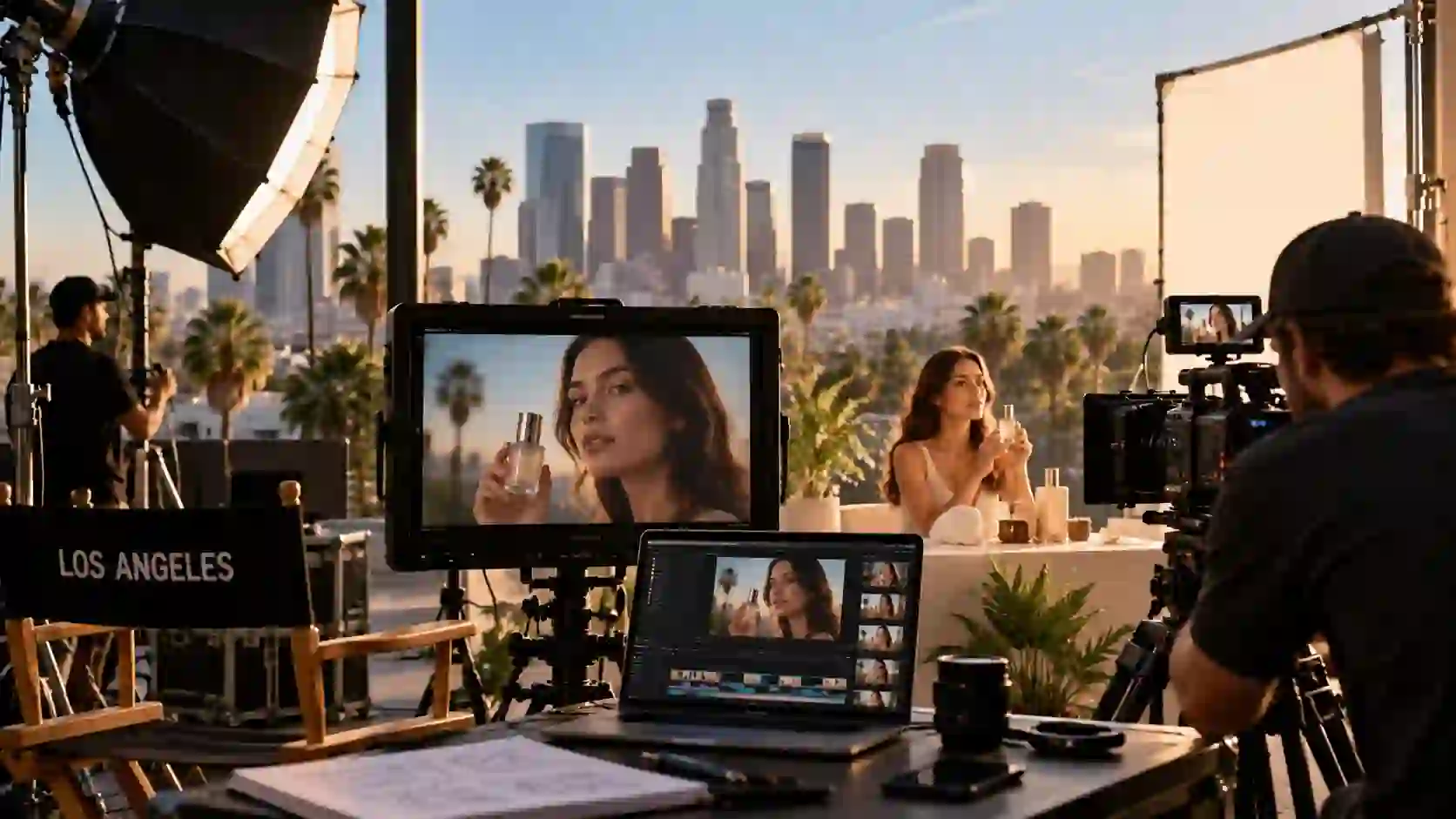
For many brands, the appeal of boutique production companies in Los Angeles comes down to the way creative work gets done. A smaller production team can offer a more direct working relationship, fewer layers of communication, and a production process that adapts to the project's requirements.
This matters when marketing teams are working against campaign deadlines. A DTC skincare company preparing a seasonal launch, for example, may need a hero product video, short paid social ads, and several pieces of supporting content. If every change requires a lengthy approval process, the campaign can lose valuable time before the first ad even runs.
Boutique production companies often work with more focused teams. The director, producer, creative lead, and client may communicate more directly, depending on the company's structure. That can make it easier to discuss a revised script, adjust a product shot, or change the direction of a scene before the production budget is committed.
There is also a creative consideration. Smaller teams may be more willing to build a production around a specific brand idea instead of relying on a familiar commercial format. A premium home goods brand might want understated lighting, close-up product details, and a slower visual rhythm. A fast-growing fitness brand may need energetic demonstrations and short scenes designed for mobile viewing. Neither project necessarily requires the same production setup.
Still, smaller does not automatically mean better. Some boutique studios have limited capacity, and a team that excels at one commercial format may not be equipped for complex animation, extensive location work, or a high-volume campaign. Brands need to evaluate the actual production capabilities rather than assume that a boutique label guarantees personal service or creative quality.
For businesses comparing boutique production companies in Los Angeles, the useful question is simple: can the team deliver the specific creative work the campaign requires, within the available time and budget?
The difference is not just the number of employees. It is how the production operation is organized and how much complexity a project needs.
A large production house may have access to extensive equipment, specialized departments, established crew networks, and experience handling demanding commercial shoots. Those resources become valuable when a project involves multiple locations, elaborate sets, large casts, complex lighting, or a tightly coordinated filming schedule.
Boutique production companies in Los Angeles often operate with a more focused structure. They may bring in additional crew members and specialists when a project calls for them rather than maintaining a large permanent team. That can suit brands that need professional production but do not need a major commercial setup for every campaign.
The distinction becomes clearer when a company has several types of video to produce.
A brand might need one polished product commercial for its website, six short ads for Meta, a founder interview, and a series of customer testimonial videos. These assets have different creative requirements. A boutique production partner may be able to organize the work into a more manageable production plan, especially when the concepts can share locations, product setups, or visual elements.
However, a smaller production team still needs the right skills and workflow. A lean operation that lacks clear project management can create the same delays as a larger organization. Fast communication is useful only when decisions are documented and production responsibilities are clear.
Here is how the two approaches can differ in practice.
Consideration
Boutique production company
Large production house
Communication
Often more direct and personal
May involve several departments and approval layers
Project scale
Well suited to focused productions and selected campaign needs
Often equipped for complex, large-scale productions
Production resources
May build a crew around each project
May have broader in-house resources and established teams
Creative flexibility
Can allow closer collaboration on a defined project
Can support specialized creative requirements across departments
Budget planning
May offer leaner setups when the scope allows
Can accommodate larger production requirements, with corresponding costs
Capacity
Depends on team size and scheduling
May have greater capacity for simultaneous large projects
These are general tendencies, not guarantees. Some boutique production companies run sophisticated operations, while some larger studios provide highly personal service.
For a US ecommerce brand, the right choice depends on the work ahead. If the campaign requires a single strong concept with several deliverables, a boutique setup may make sense. If the brief involves a national commercial with extensive casting, multiple locations, and demanding technical requirements, a larger operation may be more appropriate.
Commercial video production is no longer limited to one television commercial or a polished brand film. Marketing teams need content for different placements, stages of the buying journey, and campaign objectives.
This creates a practical challenge for boutique production companies in Los Angeles. They need to understand not only how to produce attractive footage but also how brands intend to use that footage after delivery.
Product videos remain important for ecommerce businesses. A strong product video can show how an item works, demonstrate its scale, explain a feature, or make its materials and finish easier to understand. For products that are difficult to evaluate through static images, those details can help customers make a more informed purchase decision.
Paid social ads have different demands. A video designed for Meta Ads or TikTok Ads needs to communicate quickly, especially when the viewer has little prior knowledge of the brand. The opening scene, product demonstration, message, and offer all need to work together. A beautiful opening shot may not be enough if the product benefit appears too late.
Brand films and corporate videos serve another purpose. They may introduce a company, communicate its point of view, explain its manufacturing process, or show the people behind the business. These assets often benefit from a more deliberate narrative and a consistent visual identity.
Other common requirements include:
Consider a fictional Los Angeles based skincare brand launching a new moisturizer. Its marketing team may need one cinematic product film for the website, a set of short demonstration ads, creator-style testimonials, and a few versions focused on specific product benefits.
Producing each asset as a completely separate project could create unnecessary costs and scheduling pressure. Planning the deliverables together may allow the team to share product photography, visual references, messaging, and selected footage.
That does not mean every video should look identical. A website film can take its time. A paid social ad may need to reach the product demonstration within the opening seconds. The production plan should account for those differences from the beginning.
A production project rarely starts with a camera. It starts with a decision about what the video needs to accomplish.
For an ecommerce campaign, that decision might be to explain a product feature that customers frequently misunderstand. For a corporate video, it could be to communicate a company's expertise without making the result feel like a scripted sales pitch. The creative brief needs to establish that purpose before the team gets deep into production details.
Boutique production companies in Los Angeles typically develop projects through a combination of creative planning, preproduction, filming or content creation, postproduction, and delivery. The exact process varies, but the handoffs between these stages often determine whether the project stays on track.
Creative development comes before production decisions
The initial work usually involves clarifying the audience, message, visual direction, deliverables, and intended use of the video. For advertising, the team may also discuss the opening hook, product benefit, call to action, aspect ratios, and the number of creative variations required.
These details matter because a vague brief can lead to expensive revisions. If a brand expects a direct response ad but the production team creates a slow, cinematic brand piece, the footage may be technically excellent and still miss the brief.
Preproduction determines what is realistic
Once the creative direction is agreed upon, the team can work through scripts, storyboards, shot lists, casting, locations, props, schedules, and production requirements.
For a product launch, this stage should also establish which assets need to be captured together. If the same product will appear in a website video, paid social ads, and email campaign content, planning those shots in advance may reduce the need for additional filming.
Production and postproduction require clear decisions
During production, the team captures the material required by the approved brief. Postproduction then brings the material together through editing, sound design, color correction, motion graphics, captions, and formatting.
This is where a practical issue often appears. A marketing director may approve the first cut, while a founder requests a different tone and a paid media manager asks for a stronger opening. Without a defined approval process, the project can move through several rounds of revisions without anyone agreeing on the final objective.
A useful production agreement identifies who approves the work, how feedback should be consolidated, what counts as a revision, and which deliverables are included. It should also clarify how additional requests affect cost and timing.
For brands hiring boutique production companies in Los Angeles, these details are just as important as the portfolio. The creative relationship works better when everyone understands what success looks like before production begins.
AI video production is changing how some commercial projects are developed, particularly when brands need multiple concepts, visual variations, or assets that would be expensive to produce through conventional filming alone.
It is not a replacement for every production technique. It is another option, and its usefulness depends on the creative brief.
For example, a DTC brand testing several advertising concepts may want to explore different environments, visual moods, or narrative directions before committing to a full shoot. AI-assisted workflows can help create concept visuals, test selected ideas, and produce certain types of video content without requiring every scene to be filmed traditionally.
That can be valuable when a brand is trying to determine whether an advertising angle is worth pursuing. Instead of spending the entire budget on one elaborate concept, the team may be able to explore a wider range of creative directions and then allocate more production resources to the ideas that justify them.
There are limits, though. AI-generated product imagery can introduce inaccuracies in packaging, labels, proportions, materials, or how an item behaves. Those errors matter when the video represents a real product that customers will receive. Human review remains essential, particularly for product demonstrations, regulated categories, and advertising claims.
AI video production also involves creative decisions that technology cannot settle on its own. A generated scene may look impressive but have little connection to the audience's buying motivation. A technically consistent video can still fail to communicate the product benefit clearly.
This is where Brahvo AI fits into the conversation. Brahvo AI focuses on AI video production, giving brands another way to approach video creation when their content requirements extend beyond a single traditional shoot. For ecommerce and performance marketing teams, the relevant consideration is how AI-assisted production can support the intended creative output, rather than using AI simply because it is available.
A sensible workflow starts with the business requirement. If a product needs a highly accurate physical demonstration, conventional filming may remain the stronger choice. If the brief calls for conceptual visuals, selected synthetic scenes, or creative exploration, AI may offer more flexibility. Some projects can combine both approaches.
I might be wrong here, but the most useful distinction may not be between AI production and traditional production at all. It may be between content that genuinely needs a physical camera and content that can achieve its purpose through another method.
That distinction becomes more important when a brand has dozens of SKUs, several advertising channels, and limited time to refresh its creative library. The question is no longer simply how to make one good video. It is how to produce the right assets without spending heavily on content the business may never use.
A production budget can look reasonable until the project starts expanding. The original brief calls for one commercial. Then the team requests vertical edits for paid social, alternate product shots, different opening hooks, additional aspect ratios, and a shorter version for the website. None of these requests sounds unreasonable on its own, but together they can change the cost and delivery schedule.
For brands evaluating boutique production companies in Los Angeles, the challenge is finding the right balance between creative quality and the number of assets the business actually needs. Spending more does not automatically produce better advertising results. Spending too little can also become expensive when the footage cannot support the campaign or needs to be reshot.
The first decision should be the role of the video. Is it a brand film intended to represent the company for several years, a product launch asset with a fixed release date, or a paid social creative that will be tested and potentially replaced within weeks? Each purpose calls for a different level of investment.
A brand film may justify more time for casting, lighting, location selection, and postproduction. A short paid social ad may benefit more from clear messaging, an effective demonstration, and several opening variations than from an elaborate set.
Budget for the entire production, not just filming
The quoted production cost is only one part of the financial picture. Creative development, scripting, talent, location fees, equipment, editing, motion graphics, music licensing, revisions, and usage rights may all affect the final amount.
AI video production introduces its own considerations, including creative development, generation time, editing, quality control, and any required conventional footage. It should not automatically be treated as free or effortless simply because a physical shoot is not involved.
Before approving a project, marketing teams should ask for a clear breakdown of deliverables and costs. They should also clarify whether raw footage, project files, additional edits, and future usage are included.
Deadlines need room for decisions
Production delays often come from unresolved approvals rather than the filming itself. A product sample arrives late. The founder changes the offer. Legal reviews the script after the first cut. A product label changes just before delivery.
A workable timeline accounts for these possibilities. It identifies the person responsible for approvals, sets feedback deadlines, and establishes when changes will affect the delivery date.
Consider a fictional US DTC brand preparing a holiday campaign. The team has four weeks to create a product commercial and six paid social variations. Rather than allocating the entire schedule to one polished video, the production team plans a core concept, captures the necessary product footage, and reserves time for editing and revisions. The first approved assets can support early campaign testing while the remaining variations are completed.
This approach does not guarantee better advertising performance, but it gives the media team more usable material and reduces the risk of missing the campaign window.
The practical tradeoff is straightforward. A brand should spend enough to get the creative right, but it should not consume the entire budget on a single asset when the campaign depends on multiple concepts and formats.
For ecommerce companies, video production does not end when the final edit is approved. The content has to fit into a wider advertising system that includes audience targeting, campaign budgets, product margins, landing pages, and conversion tracking.
This is particularly important for DTC brands running Meta Ads and TikTok Ads. Their creative requirements can change quickly as products, offers, audiences, and campaign results change. A video that attracts attention may not generate purchases, while a less dramatic product demonstration may lead to more qualified traffic.
That is why production planning should involve the people who will use the finished assets. Media buyers can explain which messages have already been tested, which customer objections remain unanswered, and where existing creative has become repetitive. Creative teams can then use that information to develop distinct concepts instead of producing minor edits that offer little new information.
Creative variety matters more than the number of files
Producing twenty versions of the same ad does not necessarily give a brand twenty meaningful tests. Changing a headline or trimming a few seconds may be useful in some cases, but it is different from testing a new customer motivation.
A more useful set of concepts might include a product demonstration, a problem and solution scenario, a founder explanation, a customer use case, and a comparison of relevant product features. Each concept gives the advertising team a different reason to evaluate the creative.
For example, a US home organization brand selling modular storage products could test ads built around limited closet space, easier daily routines, and the flexibility of rearranging the system. These concepts address different buying motivations even though they promote the same SKU.
The production team can then capture or create footage that supports each message. This makes creative planning more closely connected to customer acquisition rather than treating every video as a standalone artistic project.
Plan assets around the channels where they will run
Meta Ads, TikTok Ads, YouTube Ads, product pages, and email campaigns do not always need identical edits. A vertical short-form ad may need an immediate opening and on-screen captions. A longer YouTube commercial can develop a story in more detail. A product page video may need to prioritize clarity and product use.
A production brief should identify the intended placements before editing begins. Otherwise, the team may receive a polished master video that requires extensive reworking to fit the campaign.
Brands should also plan for how performance will be evaluated. Click-through rate can help show whether an ad attracts interest, but it does not tell the whole story. Conversion rate, customer acquisition cost, purchase value, contribution margin, and repeat purchase behavior can provide additional context.
The exact measures depend on the campaign objective and the quality of the available tracking data.
There is another consideration for growing ecommerce companies. A creative concept that works for one product may not transfer directly to every SKU. A supplement, a piece of furniture, and a skincare product have different purchase motivations and demonstration requirements. Reusing a production format can save time, but the message still needs to fit the product.
Boutique production companies in Los Angeles that understand these requirements can be useful partners for brands that need creative assets built around actual campaign needs. The important part is making sure production and paid media teams agree on what each asset is supposed to test.
Growing brands often reach a point where their advertising plans are moving faster than their production process. The media buyer has identified new messaging angles, the ecommerce team is preparing another product launch, and the creative team is still waiting for assets from the previous campaign.
Brahvo AI approaches this problem through AI powered video production built around advertising creative rather than traditional filming requirements. The company offers a done for you service for brands that need video ads for Meta and TikTok, with human creative direction and AI generated visuals forming part of the production process.
The distinction matters because producing a video is only one part of the job. The creative still needs a clear message, an opening that earns attention, a reason for the viewer to care, and a natural path toward the next action.
Starting with the product and advertising objective
The process begins with the product, its selling points, and the brand's goals. Those details help establish which customer problem the video should address and which benefits deserve the most attention.
For example, a DTC brand selling travel accessories might have several potential advertising angles. One video could focus on saving luggage space. Another could demonstrate how the product organizes everyday essentials. A third might show how it fits into a busy travel routine.
These concepts serve different purposes even though they promote the same item. The production decision should follow the message rather than forcing every product into the same creative format.
Combining human direction with AI production
Brahvo AI describes a workflow in which its team develops the advertising concept and script, creates visuals with AI, and edits the resulting video for delivery. The service is designed to reduce the need for physical shoots, studio bookings, and creator coordination.
For a growing ecommerce brand, this approach can be useful when the immediate requirement is a steady supply of advertising creatives rather than a large traditional commercial production.
There are still practical checks to make. Product appearance needs to remain accurate. Claims must reflect what the business can substantiate. Voiceovers, captions, and visual sequences should make sense together. An ad should not be approved just because it looks polished.
Supporting a repeatable creative workflow
The longer term opportunity is to connect video production with the brand's advertising calendar. A company preparing for a seasonal sale, introducing new SKUs, or testing new customer segments can plan creative requirements before the last minute.
Brahvo AI's focus on advertising ready videos is relevant to brands that need this kind of ongoing creative support. Its approach is particularly suited to paid social requirements, where different hooks and product messages can be developed for campaign testing.
That does not mean every brand needs a large volume of new videos each month. A smaller business with one established product may need only a handful of well considered concepts. A brand with dozens of SKUs and several active campaigns may have a very different requirement.
The useful starting point is understanding how much creative the business can realistically test, how quickly new assets are needed, and whether the current production process can meet that demand.
A strong portfolio can get a production company onto the shortlist, but it cannot tell you everything about working with that team. Before committing a budget, brands should understand how the company handles creative development, revisions, delivery, and the practical requirements of the campaign.
For businesses evaluating boutique production companies in Los Angeles, the following questions can help separate a promising presentation from a production relationship that actually fits.
Does the company understand your intended audience?
A video for a premium skincare brand should not necessarily follow the same creative logic as an ad for affordable home accessories. Ask how the team approaches the product's selling points, customer objections, and intended audience.
Can it deliver the required formats?
Confirm the number of videos, aspect ratios, durations, captions, and variations included in the scope. If the campaign needs separate versions for Meta Ads, TikTok Ads, and YouTube, those requirements should be discussed before production starts.
How are revisions handled?
Ask how many revision rounds are included, who approves the script and first cut, and what happens when the brief changes. This becomes particularly important when several stakeholders are involved.
What are the rights and usage terms?
Clarify commercial usage rights, music licensing, talent permissions, ownership of delivered assets, and access to source files where relevant. AI generated content also requires attention to applicable licensing terms and the permitted use of any supplied assets.
Can the production model handle future demand?
One successful project does not automatically establish that a team can support monthly campaigns or multiple product launches. Discuss likely production volume, turnaround expectations, and how priorities are managed when several projects overlap.
How will success be evaluated?
Production quality can be assessed through the finished work, but advertising performance depends on more than visual execution. Ask whether the team understands the campaign objective and can deliver creative assets that support the planned testing process.
It is also worth comparing the full cost of each approach. A conventional shoot may make sense for a flagship commercial or a product that requires precise physical demonstrations. An AI assisted workflow may be more appropriate for selected advertising concepts and recurring creative needs.
There is no need to force every project into one production model. A company may use traditional filming for important brand assets and AI video production for certain paid social campaigns.
The right decision depends on the deliverables, the available budget, the required level of product accuracy, and the time the marketing team has to get the work live.
1. What are boutique production companies in Los Angeles?
Boutique production companies in Los Angeles are typically smaller or more specialized production businesses that create commercial videos, branded content, product videos, and other visual assets. Their project scope and capabilities vary, so brands should evaluate the actual services offered rather than relying on company size alone.
2. How much do boutique production companies in Los Angeles charge?
Pricing depends on the production scope, crew requirements, locations, talent, equipment, editing, and usage rights. A simple product video and a complex commercial can have very different budgets. Request an itemized estimate that specifies deliverables, revisions, and any additional charges.
3. Are boutique production companies suitable for ecommerce brands?
Yes. They can be a good fit for product demonstrations, launch videos, branded content, and paid social advertising. The important consideration is whether the company understands ecommerce requirements and can deliver the formats and variations needed for the campaign.
4. How are boutique production companies different from traditional production houses?
Boutique companies often work with smaller, more focused teams, while larger production houses may have greater resources for complex shoots. Neither model is automatically better. The project's creative requirements, schedule, and budget should determine the choice.
5. Can AI video production replace a traditional commercial shoot?
Not in every situation. AI can support concept development and the creation of selected advertising visuals, but some projects depend on authentic physical demonstrations, precise product details, or live performances. The best approach depends on what the finished video needs to communicate.
6. How can AI video production help DTC brands?
AI video production can help DTC brands create certain types of advertising content without arranging a traditional shoot for every concept. This can be useful when testing different product benefits, customer problems, and creative directions across paid social campaigns.
7. What should a brand prepare before hiring a production company?
Prepare the product information, campaign objective, target audience, key selling points, visual references, required formats, budget, and delivery deadline. For advertising projects, sharing previous campaign results and known customer objections can also help the creative team develop more relevant concepts.
8. How many video ads should an ecommerce brand produce each month?
There is no universal number. A brand running a small number of campaigns may need only a few distinct concepts, while a larger company managing several products and audiences may require a more regular production schedule. The available advertising budget and ability to evaluate creative performance should influence the volume.
9. What does Brahvo AI offer brands looking for video production?
Brahvo AI offers a done for you AI video production service focused on paid advertising creatives for Meta and TikTok. Its stated process covers creative development, scripting, AI generated visuals, and editing, with the aim of helping brands produce advertising content without conventional filming requirements.
10. Should a brand choose traditional production or an AI video service?
Start with the purpose of the video. If the project requires real people, detailed physical demonstrations, or complex live action scenes, traditional production may be the better fit. If the priority is developing selected ad concepts and producing video variations without organizing a shoot, an AI video service may be worth considering.